Stanford's 2026 AI Index: The Numbers That Define an Industry at a Crossroads
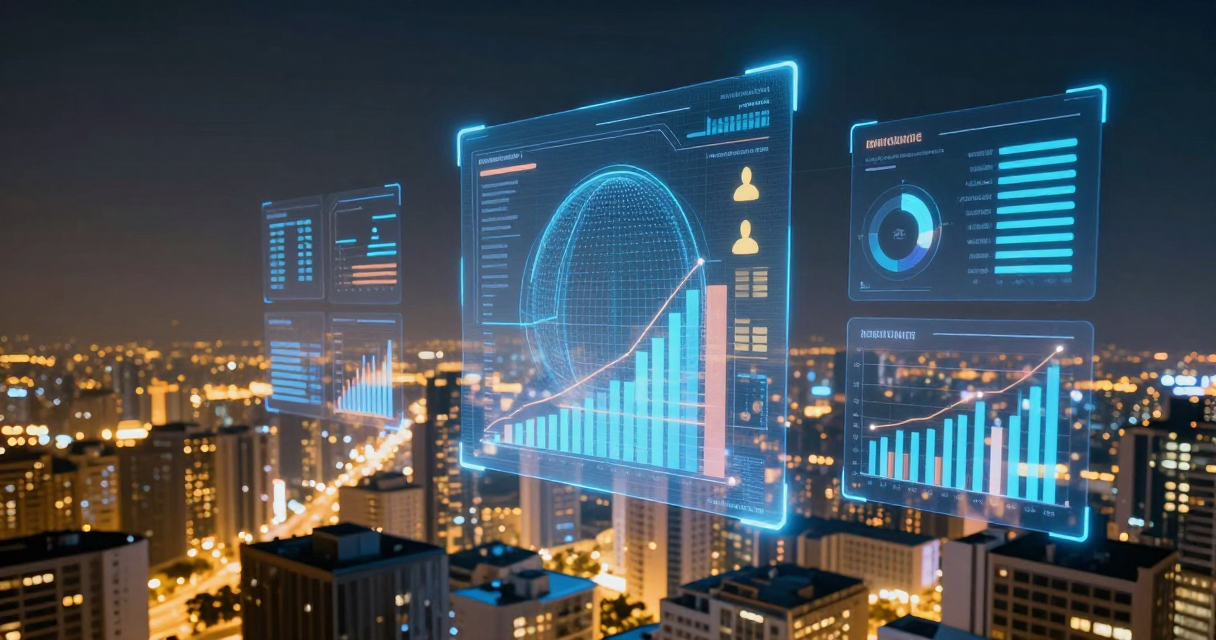
Every year since 2017, Stanford University's Institute for Human-Centered Artificial Intelligence (HAI) has published the AI Index — a data-driven autopsy of the entire artificial intelligence industry. The report is not an opinion piece. It tracks model performance, investment flows, environmental costs, workforce shifts, regulation, and public sentiment with the kind of granular rigor that makes it the closest thing the AI world has to an annual earnings report for the species. The 2026 edition, released in April, is the most sobering yet. It reveals a field that is scaling faster than the systems around it can adapt — producing breakthrough capabilities while consuming resources at rates that should alarm anyone paying attention. Here are the numbers that matter most.
How Much Power Is AI Really Consuming?
The environmental costs of training and deploying frontier AI models have reached levels that are no longer theoretical. According to the report, Grok 4's estimated training emissions reached 72,816 tons of CO₂ equivalent — roughly the same greenhouse gas output as driving 17,000 cars for an entire year. That's a single model. AI data center power capacity globally has risen to 29.6 gigawatts, which is approximately what it takes to power the entire state of New York at peak demand. For further perspective, the cumulative power demand of all-in AI systems is now comparable to the national electricity consumption of Switzerland or Austria.
And it's not just carbon. The water footprint of AI inference is staggering. Annual GPT-4o inference water use — the water consumed to cool data servers or run them on hydroelectric power — may exceed the drinking water needs of 1.2 million people. These aren't marginal costs. They are infrastructure-scale resource draws that are straining power grids and water systems in the regions where data centers cluster. As we've explored previously, the gap between AI compute ambitions and available power supply remains one of the industry's most critical bottlenecks. The AI Index puts hard numbers behind that concern, and the numbers are not getting smaller.
Are the US and China Really Neck and Neck in AI?
For years, the United States outpaced every other region in AI — in model size, performance, research output, and citations. But the 2026 data shows that China has emerged as a genuine counterweight, and in some dimensions, has erased the American lead entirely. According to Arena, a community-driven ranking platform that allows users to compare large language model outputs on identical prompts, the top models are now separated by razor-thin margins. As of March 2026, Anthropic's Claude leads the rankings, trailed closely by xAI, Google, and OpenAI. Chinese models from DeepSeek and Alibaba lag only modestly behind.
The rivalry is more nuanced than a simple leaderboard, however. The U.S. still produces more top-tier AI models and higher-impact patents. But China leads in publication volume, total patent output, citations, and industrial robot installations. The report notes that U.S. and Chinese models have traded places at the top of performance rankings multiple times since early 2025 — in February 2025, DeepSeek-R1 briefly matched the top U.S. model. The United States also hosts an estimated 5,427 data centers, more than ten times as many as any other country, which represents a significant structural advantage in compute capacity. But the performance gap is closing, and the competition is now shifting toward cost efficiency, reliability, and real-world deployment — battlegrounds where neither side has a decisive edge.
Is America's AI Talent Pipeline Breaking?
Perhaps the most concerning finding in the entire report is not about model performance or investment — it's about people. The United States is home to more AI researchers and developers than any other country by a wide margin, but the inflow of international talent has collapsed. The number of AI scholars moving to the United States has dropped 89% since 2017. That decline is accelerating, with an 80% reduction in just the last year alone. This is not a gradual taper. It is a cliff.
The implications are profound. The U.S. AI industry has been heavily dependent on foreign-born talent — a fact that has been true since the field's earliest days. If the talent pipeline continues to constrict, the structural advantages that have kept the U.S. at the forefront of AI development could erode faster than any model performance lead. Immigration policy, visa processing delays, and geopolitical competition from other countries that are aggressively recruiting AI researchers all contribute to the squeeze. The data suggests that the U.S. cannot take its talent supremacy for granted, and the window to address the problem may be narrowing faster than policymakers realize.
Is AI Actually Taking Jobs Yet?
The workforce question is where the AI Index moves from abstraction to immediate consequence. The data shows that productivity gains from AI are appearing in the same fields where entry-level employment is declining. Employment among software developers aged 22–25 has dropped nearly 20% since 2024, even as headcount for their older colleagues continues to grow. The same pattern repeats in other roles with high AI exposure, particularly customer service.
The asymmetry is striking: AI is boosting productivity by 14% in customer service and 26% in software development, according to studies cited in the report, but those gains are not translating into more entry-level hiring. Firm surveys indicate that executives expect this trend to accelerate, with planned headcount reductions outpacing recent cuts. The report frames it bluntly: "The disruption is targeted and just beginning." Young workers entering the job market in AI-exposed fields are the canaries in the coal mine. The productivity gains are real, but the distribution of their benefits is deeply uneven.
How Fast Is AI Adoption Spreading?
On the demand side, the numbers are historic. Generative AI reached 53% global population adoption within three years of going mainstream — faster than the personal computer or the internet achieved in comparable timeframes. An estimated 88% of organizations now use AI in some capacity, and four out of five university students use it for school-related tasks. The estimated value of generative AI tools to U.S. consumers reached $172 billion annually by early 2026, with the median value per user tripling between 2025 and 2026.
But adoption is not uniform. The U.S. ranks only 24th globally in population-level generative AI adoption at 28.3%, well behind leaders like Singapore (61%) and the United Arab Emirates (54%). Adoption correlates strongly with GDP per capita, which means the AI revolution is reproducing existing digital divides rather than closing them. The tools are spreading faster than anything in technology history, but the people who benefit most are not necessarily the ones who need them most.
Why Are the Most Powerful AI Models the Least Transparent?
The Foundation Model Transparency Index, which measures how openly major AI companies disclose details about training data, compute, capabilities, risks, and usage policies, saw its average score drop to 40 points in 2026, down from 58 the previous year. The report notes a direct correlation: the most capable models disclose the least amount of information. Companies like OpenAI, Anthropic, and Google no longer routinely share training code, parameter counts, or dataset sizes.
This is not merely an academic concern. Without transparency, independent researchers cannot verify safety claims, replicate results, or study model behaviors in the systematic ways that the field requires. As Yolanda Gil, a computer scientist at the University of Southern California and coauthor of the report, put it: "We don't know a lot of things about predicting model behaviors." The irony is that AI is achieving its most impressive capabilities precisely as the ability to understand and audit those capabilities is diminishing. For an industry that is increasingly being asked to self-regulate, the trend toward opacity is a structural risk that compounds every other risk in the ecosystem.
What Does All of This Mean?
What makes the 2026 AI Index different from its predecessors is the convergence of its findings. Previous editions told a story of rapid capability gains tempered by modest societal impact. This year's report describes a technology that has fully crossed into the real economy — consuming resources at infrastructure scale, reshaping labor markets, attracting record investment, and outpacing the regulatory, educational, and evaluative frameworks built to manage it. Global corporate AI investments hit $581.7 billion in 2025, up 130% from the prior year. Private investments reached $344.7 billion, a 127.5% increase. The United States alone accounted for $285.9 billion of that — 23.1 times more than China's $12.4 billion in private AI investment (though the report notes that China's actual AI spending is likely higher due to government guidance funds).
At the same time, the report documents an AI system that is as uneven as it is powerful. It can win a Mathematical Olympiad but struggles to tell time. It can automate 93% of cybersecurity tasks but succeeds in only 12% of real household chores. AI agents handling real-world tasks improved from 20% success in 2025 to 77.3% today, which is extraordinary progress, but the remaining 22.7% gap represents the difference between a useful tool and a reliable system. Public sentiment mirrors this ambivalence: 59% of people worldwide report feeling optimistic about AI's benefits, but 52% also report feeling nervous about it. In the United States, only 33% of Americans expect AI to make their jobs better, and Americans report the lowest trust in their government to regulate AI of any country surveyed, at 31%.
The AI Index does not prescribe solutions. But it makes the shape of the challenge unmistakable. The technology is not waiting for the policy, educational, and infrastructure systems to catch up. Whether those systems can close the gap — or whether the gap itself becomes the defining feature of the AI era — is the question that the next several years will answer.

Comments ()