The AI Power Crisis Is Real: Why Data Centers Are Becoming the Industry's Biggest Bottleneck
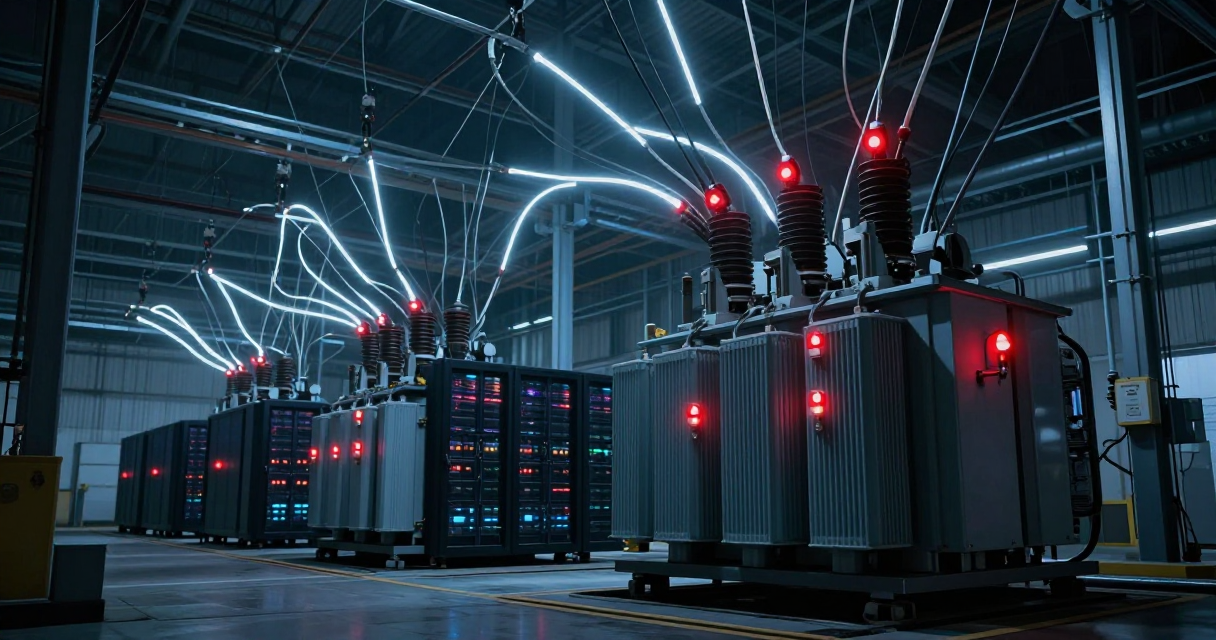
Despite over $650 billion in combined hyperscaler capital expenditure, roughly half of planned U.S. data center projects in 2026 are being delayed or cancelled — not because of chips, not because of models, but because there simply isn't enough electricity to power them.
Why Can't Money Alone Solve the AI Power Problem?
The great contradiction of the 2026 AI boom is almost absurd in its simplicity. The largest technology companies on Earth are committing unprecedented sums to AI infrastructure — collectively over $650 billion in capital expenditure this year alone — yet nearly half of planned U.S. data center projects are stalling. The bottleneck isn't semiconductors. It isn't talent. It isn't even capital. It's something far more mundane and far harder to accelerate: electricity.
As Kersai's May 2026 analysis lays out, this is a fundamentally different kind of bottleneck than the AI industry has faced before. Chips can be manufactured faster with more fabs. Models can be trained on more GPUs. But substations need to be permitted, built, and connected to the grid. Transformers have multi-year lead times. Transmission lines require right-of-way negotiations with landowners, municipalities, and environmental regulators. These are not software update problems. They are industrial coordination problems that move on a timeline measured in years, not quarters.
How Much Power Does AI Actually Need?
The scale of AI's electricity appetite is staggering. Modern AI data center campuses routinely require hundreds of megawatts of capacity. A single large-scale training run for a frontier model can consume as much electricity as thousands of households use in a year. Inference — the day-to-day work of serving model responses to millions of users — is often even more energy-intensive at scale because it runs continuously.
Gartner has projected that power shortages could restrict around 40% of AI data centers by 2027. Analysts now routinely frame a single AI-heavy query as consuming dramatically more electricity than a traditional web search. When you multiply that per-query cost across billions of daily interactions, the aggregate demand becomes a grid-level challenge.
This isn't theoretical. In China, strong demand for AI computing equipment has nearly doubled prices for Nvidia's B300 servers to about 7 million yuan ($1 million) each, according to Reuters reporting. The energy cost of running these servers is now a first-order constraint on deployment decisions.
What Happens When Half the Planned Data Centers Get Delayed?
The cascading effects of power-constrained infrastructure extend far beyond the data center industry itself:
Model development slows at the frontier. Training the next generation of frontier models requires massive, concentrated power delivery. When data center projects are delayed, training timelines slip. Labs that planned to have their next models ready by Q4 2026 may find themselves waiting on substation construction instead.
Pricing pressure intensifies. When supply of compute is constrained by power rather than demand, prices rise. We're already seeing API price increases from OpenAI (GPT-5.5 went from $2.50/$15 to $5/$30 per million tokens). Power costs are a significant contributor to those increases, and the trend is directional — upward.
Geographic advantage shifts. Regions with abundant, affordable electricity — parts of the Pacific Northwest, Nordic countries, certain Middle Eastern nations — become strategically important for AI deployment. This could accelerate a geographic redistribution of AI infrastructure away from traditional tech hubs toward energy-rich locations.
Vendor concentration risk increases. Only the largest hyperscalers have the capital and negotiating power to secure power contracts, build substations, and navigate regulatory approvals. Smaller AI providers and startups may find themselves priced out of the infrastructure tier entirely, consolidating market power further into the hands of a few giants.
Are Nuclear and Renewable Energy the Answer?
The AI industry's response to the power crisis has been to invest aggressively in alternative energy sources. Several hyperscalers have signed nuclear power purchase agreements. Microsoft notably struck a deal to restart the Three Mile Island nuclear plant to power its AI data centers. Google and Amazon have made similar commitments to nuclear and advanced geothermal energy.
Renewable energy plays a critical role too, but with an important caveat: AI workloads run 24/7, and solar and wind are intermittent. Battery storage can bridge the gap, but large-scale storage deployment lags behind generation capacity. The compute demand is growing faster than the energy infrastructure can adapt.
Small modular reactors (SMRs) represent perhaps the most promising long-term solution — nuclear plants that can be built faster, at smaller scale, and closer to data center sites. But SMRs are still in the regulatory approval and early deployment phase. They won't meaningfully alleviate the power crunch before 2028 at the earliest.
What Does This Mean for the Average AI User or Developer?
The power crisis translates into several concrete impacts that developers and businesses should plan for:
Expect API costs to keep rising. Energy is a major component of inference cost, and power prices aren't going down. Budget accordingly, and invest in efficient routing architectures — sending simple queries to cheaper, smaller models while reserving frontier models for complex tasks.
Latency may increase in peak periods. Grid constraints mean data centers may face demand-response events where they throttle compute to avoid exceeding power allocations. If your application has strict latency requirements, consider multi-region deployment with providers that have diverse power sources.
Edge and on-device AI becomes more valuable. Models like Alibaba's Qwen 3.6-35B-A3B that run on consumer hardware aren't just cost savings — they're insulation against grid-dependent infrastructure. As efficiency breakthroughs continue, the gap between cloud-only and hybrid AI strategies will widen.
Security implications compound. As we've noted in our coverage of AI-era cybersecurity, power infrastructure itself becomes a critical attack surface. A data center that loses power is just as offline as one that's been hacked. Physical security and grid resilience are now cybersecurity concerns.
The Bigger Picture: AI Infrastructure Is Becoming Heavy Industry
The most important shift in the AI power crisis isn't the shortage itself — it's what it reveals about the nature of AI. For years, AI was treated as a software problem: write better algorithms, train on more data, deploy through the cloud. The cloud was abstract, the infrastructure was invisible, and the physics was somebody else's problem.
That abstraction is collapsing. AI at frontier scale is heavy industry. It requires power plants, cooling systems, transmission lines, and physical supply chains that operate on timelines completely foreign to software development. The Stanford AI Index 2026 report documents how national AI strategies are expanding, with state-backed investments in AI supercomputing rising globally — because governments understand what many tech executives are only now internalizing: controlling AI means controlling energy.
The organizations that will thrive in this environment are the ones that treat energy strategy as a core competency, not a cost center. The AI power crisis isn't a temporary inconvenience. It's the new normal — and the companies that plan for it today will have a structural advantage for years to come.
Sources: Kersai, Reuters, Stanford HAI 2026 AI Index, MIT Technology Review


Comments ()