OpenAI's Radical Plan: Robot Taxes, Wealth Funds, and a 4-Day Week
OpenAI published a detailed economic blueprint proposing public wealth funds, robot taxes, and 4-day work weeks to prepare for AI-driven disruption.
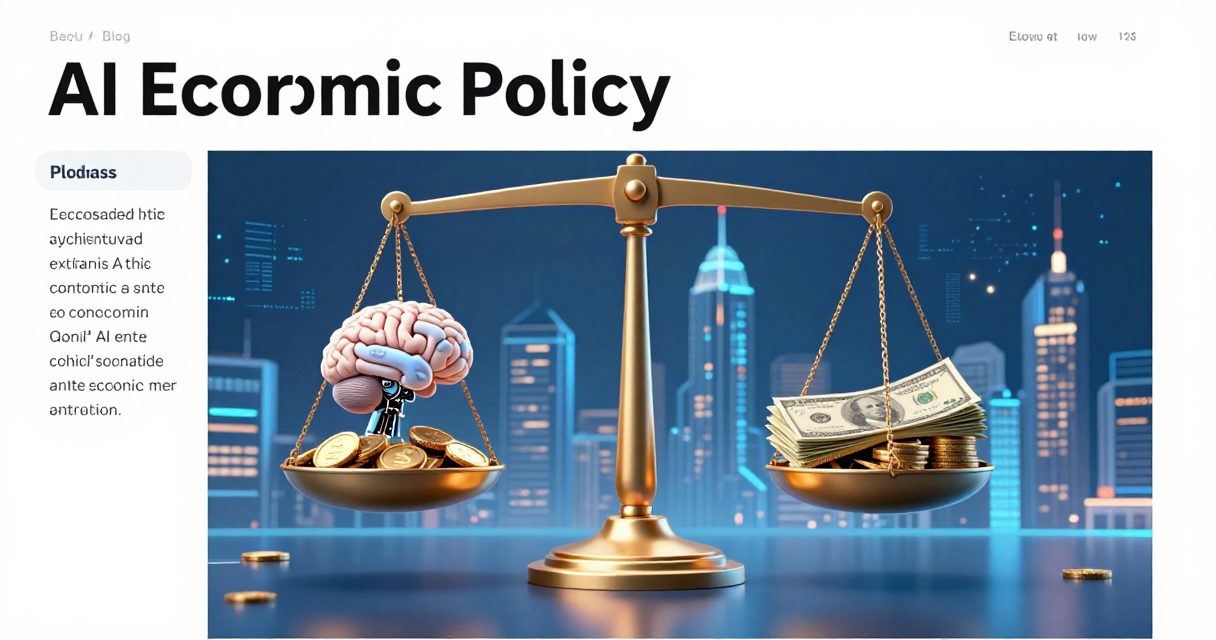
OpenAI just published its most detailed economic policy proposal yet — and it reads less like a tech company whitepaper and more like a political party platform.
OpenAI has released a comprehensive policy framework titled “Industrial Policy for the Intelligence Age,” outlining how societies should navigate the economic disruption from superintelligent AI. The document proposes mechanisms including public wealth funds, robot taxes, and corporate-subsidized four-day work weeks — a level of economic specificity that’s unusual for a company whose core business is building AI models, not writing tax policy.
The Three-Pillar Framework
OpenAI’s proposal rests on three goals: distribute AI-driven prosperity broadly to prevent extreme wealth concentration, build safeguards against systemic risks from powerful AI systems, and ensure widespread access to AI capabilities so economic power remains decentralized. The company frames the transition as requiring “an even more ambitious form of industrial policy” comparable to the New Deal.
The document acknowledges a fundamental problem: as AI automates labor, corporate profits and capital gains expand while reliance on labor income shrinks. Traditional tax bases funding Social Security, Medicaid, and housing assistance would hollow out. OpenAI proposes several mechanisms to address this.
From Labor Taxes to Capital Taxes
The most concrete proposals target the tax code. OpenAI recommends higher taxes on corporate income and AI-driven returns, increased capital gains taxes at top brackets, and a “robot tax” where automated systems would pay public coffers an amount equivalent to the taxes paid by the human worker they replaced — an idea previously floated by Bill Gates in 2017.
Notably, OpenAI doesn’t specify exact rates, a politically charged omission given the Trump administration’s corporate tax cut from 35% to 21%. The framework lands at an awkward intersection: proposing significant redistribution while the current administration pushes in the opposite direction.
The Public Wealth Fund
The most ambitious proposal is a public wealth fund that would give all Americans an automatic stake in AI companies and infrastructure, regardless of personal market investments. Returns would be distributed directly to citizens, modeled on Alaska’s Permanent Fund Dividend. If implemented at scale, it would represent the largest experiment in universal asset ownership in modern history.
The 4-Day Work Week — With a Catch
OpenAI frames the four-day work week as a voluntary corporate responsibility, not a mandate. Companies would subsidize shorter hours with no pay reduction, boost retirement matches, and cover larger shares of employee healthcare and childcare costs. But here’s the critical gap: if AI eliminates a job entirely, employer-subsidized benefits disappear with it.
OpenAI proposes portable benefit accounts that follow workers across jobs, but critics note these likely still depend on employer contributions and fall short of government-backed universal coverage for those fully displaced from the workforce.
The Contradiction Nobody Is Talking About
There’s a striking tension at the heart of this proposal. As CryptoRank’s analysis highlights, OpenAI President Greg Brockman has been a major Trump donor, and tech billionaires including OpenAI backers have funneled hundreds of millions into super PACs advocating for light-touch AI regulation. The same ecosystem funding deregulation is simultaneously proposing the most interventionist economic framework in Silicon Valley history.
The Bigger Picture
OpenAI’s framework is an advocacy document, not binding policy. But it signals where the AI industry’s thinking is heading. Anthropic submitted its own policy recommendations to the White House Office of Science and Technology Policy (OSTP) in March 2025, over a year ago, addressing many of the same themes around economic disruption and AI-driven labor shifts — though with less specificity on redistribution mechanisms. The emerging consensus among frontier AI companies is clear: they expect AI to reshape the economy fundamentally, and they want a seat at the table when the rules are written. Whether governments take their advice is another question entirely — but the conversation has moved from “will AI disrupt the economy?” to “how do we pay for the disruption?”
Sources: OpenAI — Industrial Policy for the Intelligence Age, CryptoRank / BitcoinWorld, Bill Gates — Should Robots Pay Taxes?, Alaska Permanent Fund Corporation


Comments ()