Your Website Knows More About You Than Your Therapist Does: The Terrifying Reality of Hyper-Personalization in 2026
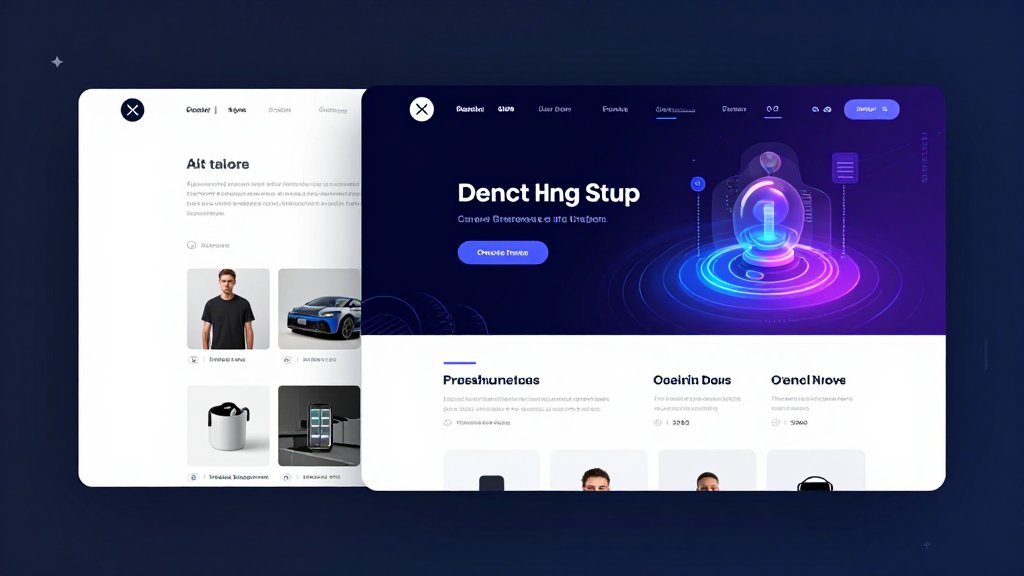
Remember when websites were basically digital brochures that everyone saw exactly the same way? Yeah, those days are deader than MySpace. Welcome to 2026, where your online experience is so meticulously tailored that it's starting to feel less like convenience and more like a digital stalker who knows your shoe size, your budget anxiety, and exactly what time of day you're most vulnerable to impulse buys.
Source: Grover Web Design (via Grover Web Design)
According to fresh insights from the past week, hyper-personalization has officially graduated from "nice-to-have" to "table stakes." SAP Emarsys dropped some frankly concerning statistics: 84% of brands still fail to differentiate themselves with personalization, while 40% of consumers say brands don't understand them as people. Perhaps most damning: 23% of customers say irrelevant, batch marketing actively damages loyalty. That's not just a marketing problem—that's a relationship problem.
Here's what's actually happening under the hood while you scroll obliviously.
The AI-First Foundation
Modern web design is no longer about making things pretty. It's about building "smart" sites that adapt in real-time. Grover Web Design reports that AI tools now handle everything from generating layouts to predicting user behavior, creating websites that function more like living organisms than static pages. Their integrated systems are already delivering production time reductions of up to 50% while enabling dynamic content that evolves with visitor interactions.
Real-Time Behavioral Orchestration
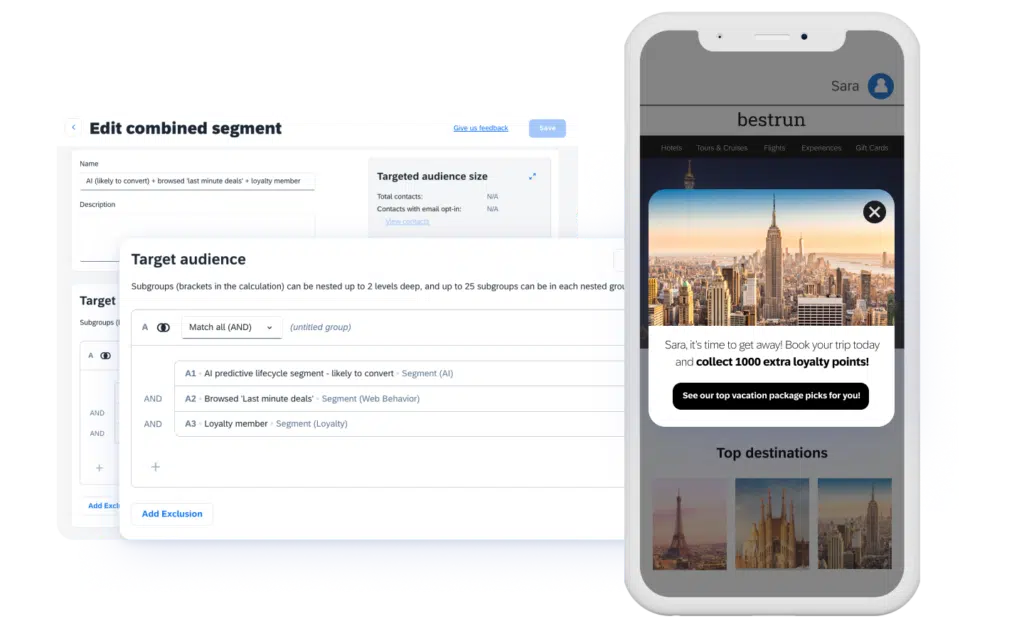
The personalization game has evolved beyond "Welcome back, [Name]" email templates. Today's sophisticated systems use behavioral triggers to respond to actual intent—not just past actions. SAP Emarsys describes this as contextual personalization: if someone lingers on a pricing page, the site surfaces comparison guides or testimonials. If they've abandoned a cart, it highlights reassurance messaging around delivery or returns. These aren't random pop-ups; they're calculated micro-interventions based on psychological signals you didn't even know you were broadcasting.
Source: SAP Emarsys (via SAP Emarsys)
The Amazon Standard: Terrifyingly Effective
If you want to see where this is all heading, look no further than Amazon. Their recommendation engine alone drives 35% of total company revenue by processing over 150 billion customer data points daily. That's not personalization—that's behavior prediction on a scale that borders on precognition. Their system adjusts homepage layouts, search results, and even pricing in real-time based on device type, location, and browsing patterns. The company has demonstrated that personalized experiences deliver 56% higher repeat purchase rates and 34% increased average order values compared to standard experiences.

Source: AMW Group (via AMW®)
The Privacy-First Paradox
Here's where things get interestingly complicated. MGID reports that third-party cookies are officially toast, yet behavioral targeting is having a "quiet revival." The solution? First-party data, hybrid contextual-behavioral approaches, and privacy-preserving technologies like federated learning—which trains models directly on user devices without uploading sensitive data.
Nudge's research highlights that 71% of consumers now expect personalized interactions, creating a brutal paradox: people want experiences tailored to their deepest preferences while simultaneously demanding unprecedented data privacy. Welcome to the era of hyper-personalization with boundaries, where brands must build trust while still being creepily effective.

Source: Nudge (via Nudge)
What This Means for Your Digital Strategy
The businesses winning in 2026 aren't just implementing personalization—they're orchestrating it across channels. Infobip reports a shift toward agentic AI frameworks where AI assistants can independently negotiate with other services to create seamless customer journeys. Imagine your personal AI booking your vacation by negotiating with a travel agency's AI, all based on your demonstrated preferences.
The tactical implications are clear: your website needs to recognize returning visitors instantly, maintain context across devices, and deliver content that responds to real-time behavioral cues rather than static demographic assumptions. The brands treating personalization as a technology initiative rather than a customer relationship strategy are the same 84% failing to differentiate.
The Bottom Line
Hyper-personalization isn't coming—it's here, and it's getting exponentially smarter. The question isn't whether to adapt your website experiences, but how quickly you can do it before your customers realize they're being algorithmically wooed and decide they're surprisingly okay with it because, honestly, the convenience is intoxicating.
Your move.


Comments ()