Physical AI Finally Grows Up: From CES Demos to Steel Mill Reality in 72 Wild Hours
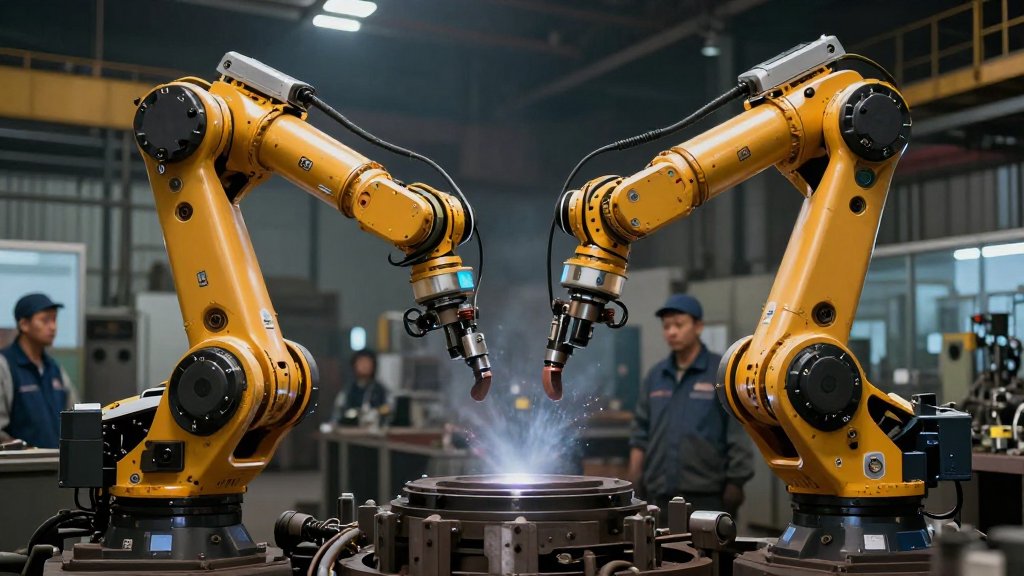
Remember when AI was just text in a chat box and robots were glorified Roombas that couldn't even climb a single stair? Those days are officially over. In what might be the most consequential 72 hours in Physical AI history, we've witnessed the industry collectively grow up, get real jobs, and prove that the future isn't coming—it's already punching a clock.
The Physical AI Revolution Just Got Very Real, Very Fast
The past three days haven't just brought incremental improvements to Physical AI—they've delivered a wholesale redefinition of what's possible when artificial intelligence gains a physical body. From household chores to industrial steel mills, robots are moving beyond laboratory curiosities into genuine workforce participants. And unlike the hype cycles of previous years, this time the deployments come with concrete business cases, real-world testing protocols, and surprisingly rapid scaling.
Household Robotics Takes a Pragmatic Turn
SwitchBot's Onero H1, unveiled at CES 2026 and still generating buzz into February, represents the most grounded approach to household robotics we've seen yet. Rather than chasing the bipedal form factor that's become the obsession of competitors, SwitchBot went with a wheeled cylindrical base equipped with articulated arms boasting 22 degrees of freedom (Boston Dynamics' Atlas achieves 29 in its upper body alone, for context) and multiple cameras embedded throughout the robot's head, arms, hands, and midsection.
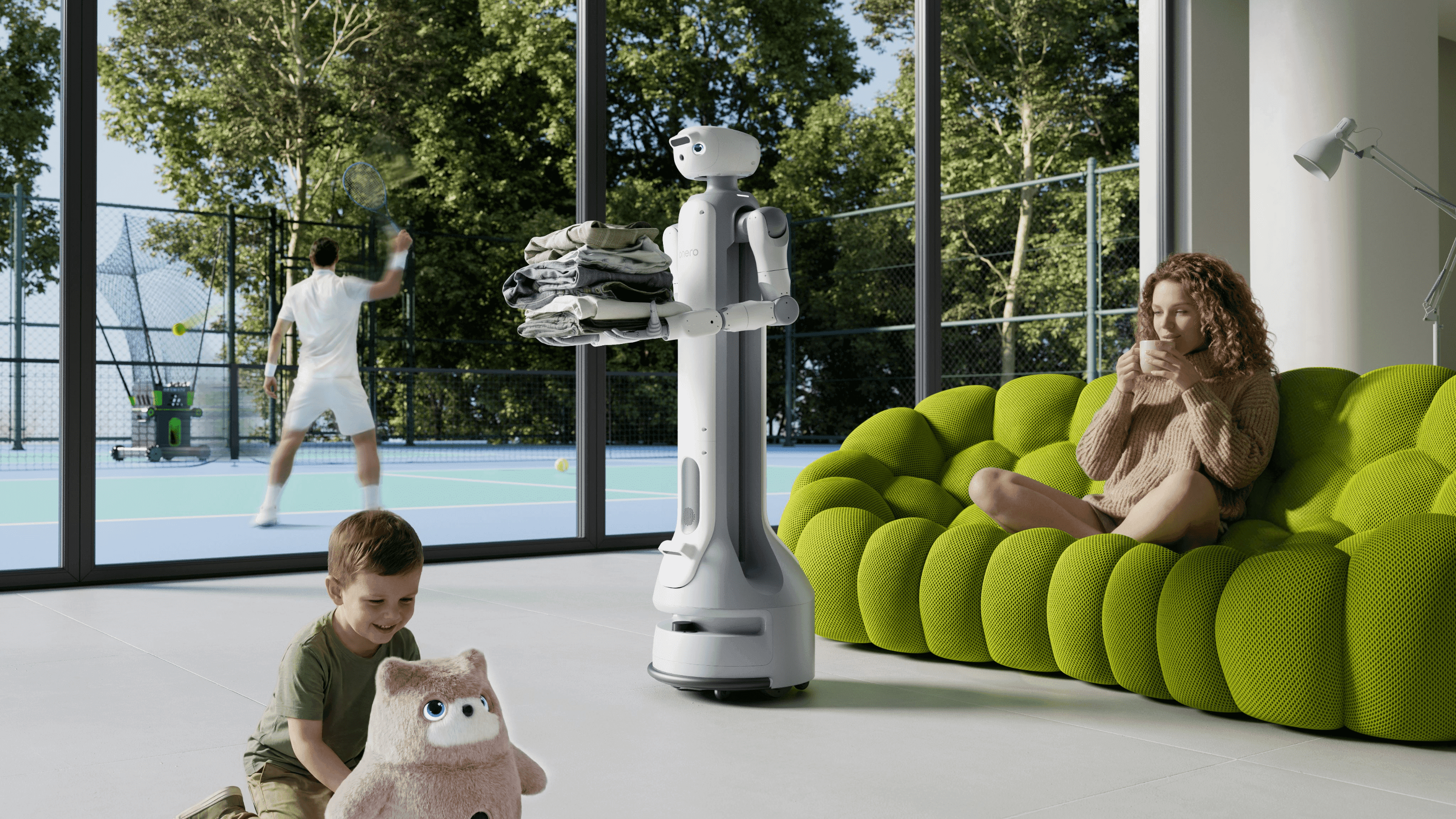
Image: SwitchBot's Onero H1 humanoid robot demonstrates household task capabilities. Source: The Tech Buzz [1]
The technical breakthrough isn't in the hardware—it's in the OmniSense vision-language-action (VLA) model running locally on-device. This means the robot processes visual information, depth data, and tactile feedback to understand what it's looking at and how to interact with it without constantly phoning home to cloud servers. Video demos show the wheeled humanoid completing tasks from filling coffee machines and making breakfast to washing windows, loading washing machines, and folding clothes with articulated precision.
"Video demos are very different from the real thing," Jennifer Pattison Tuohy from The Verge noted, reminding us that we've all seen impressive footage of robots folding towels with precision, only to discover reality delivers something far messier. But SwitchBot's strategy of positioning Onero as an "embodied smart home orchestrator" that coordinates with its existing ecosystem of task-specific devices like robot vacuums, air purifiers, and humidifiers feels more grounded than trying to build a one-size-fits-all machine. The missing piece remains pricing—SwitchBot hasn't announced whether Onero will be a $10,000 mass-market device or a $100,000 luxury item for early adopters. That detail will determine whether this becomes a meaningful category or stays a niche for tech enthusiasts.
Industrial Deployments Move From Pilot to Production
While household robots navigate the gap between demos and reality, industrial Physical AI has already arrived at the factory floor. POSCO Group's announcement on February 4th marks a significant milestone: the steel giant is pursuing a proof-of-concept project to deploy humanoid robots for logistics management within its steelworks. In human terms, POSCO is essentially offering these robots a "conversion-to-regular-employment internship."
The agreement with U.S. humanoid robot startup Persona AI will see humanoid robots deployed to POSCO steelworks sites for a one-year verification period to assess mechanical safety and human-robot collaboration potential. The robots will first handle the unloading area for finished rolled coils—work involving crane operations where humanoid robots will fasten crane belts to coils weighing 20-40 tons. "Logistics work that handles coils weighing 20~40 t carries a high risk of accidents, and there is also a latent risk of musculoskeletal disorders due to repetitive tasks," POSCO stated, adding that deploying humanoid robots can resolve these issues.

Image: Industrial humanoid robot model under development by Persona AI for steelworks deployment. Source: Khan.co.kr / POSCO Group [2]
This represents the exact use case humanoid robots were designed for: dangerous, physically demanding work that humans struggle to staff reliably. POSCO's approach—testing in controlled environments, measuring KPIs like throughput and error rates, then scaling based on results—mirrors the implementation roadmap experts have been advocating. The company plans to expand deployment across manufacturing sites and create "safe and pleasant workplaces" if the proof-of-concept succeeds.
Chip Giants Make Their Move: The Physical AI Infrastructure War Begins
Arm Holdings' January 7th announcement of a new Physical AI division focused on robotics and automotive systems represents one of the most significant strategic pivots in the semiconductor industry this year. The company reorganized into three core units—Cloud and AI, Edge for smartphones and PCs, and the new Physical AI division combining robotics and automotive efforts. This signals a dramatic shift from merely licensing CPU IP to delivering integrated hardware-software platforms optimized for real-time, edge-based AI in physical environments.
The strategic intent is clear: prioritize heterogeneous designs combining CPUs, GPUs, NPUs, and accelerators to handle robotics tasks like sensor fusion, real-time decision-making, and motor control. This enables low-latency, energy-efficient on-device AI through on-device inference, marking a significant processor architecture evolution. What does this mean for competitors like NVIDIA or Qualcomm? Arm's pivot reshapes dynamics by focusing on on-device inference over cloud scale, pushing competitors to "hybridize" workloads—edge for control, cloud for training—and invest in Arm-optimized OS, frameworks, and security for distributed systems.
Partnerships underscore this impact: Boston Dynamics already uses Arm chips in robots, and automakers are developing humanoid robots. At CES 2026, demos from Boston Dynamics, Caterpillar, and others on Arm platforms showcased practical applications. As Arm's blog notes, this is "the next platform shift" powered by physical and edge AI.
VLA Models: The Software Breakthrough Powering Physical AI
While hardware advances grab headlines, the software breakthroughs enabling vision-language-action (VLA) models to control robots might be even more consequential. Research published in arXiv papers from February 4th demonstrates remarkable progress in bridging multimodal perception with robotic control.
One paper introduces HMVLA, a novel VLA framework that exploits hierarchical structures in vision and language for comprehensive semantic alignment. Unlike traditional methods performing alignment in Euclidean space, HMVLA embeds multimodal features in hyperbolic space, enabling more effective modeling of hierarchical relationships present in image-text data. The framework introduces a sparsely-gated Mixture of Experts mechanism tailored for semantic alignment, enhancing multimodal comprehension between images and text while improving efficiency.
Another breakthrough, RDT2, represents a robotic foundation model built upon a 7B parameter vision-language model designed to enable zero-shot deployment on novel robotic platforms for open-vocabulary tasks. The researchers collected one of the largest open-source robotic datasets—over 10,000 hours of demonstrations in diverse families—using an enhanced, embodiment-agnostic Universal Manipulation Interface (UMI). The approach employs a novel three-stage training recipe aligning discrete linguistic knowledge with continuous control, becoming one of the first models that simultaneously zero-shot generalizes to unseen objects, scenes, instructions, and even robotic platforms.
What makes these advances particularly significant is their focus on zero-shot generalization—the ability for robots to handle tasks and environments they haven't specifically been trained for. This is the critical capability gap preventing widespread robotics deployment, and these papers suggest the gap is narrowing faster than expected.
China's Aggressive Push: Fastest Humanoids and Brain Interfaces
While Western companies focus on pragmatic deployment, Chinese robotics startups are pushing the boundaries of what's physically possible. Reports from February 4th detail several breakthrough demonstrations from Chinese companies:
- Unitry's G1 humanoid completed a long autonomous walk across a snowfield in sub-zero conditions, navigating 130,000 steps through uneven snow and extreme cold that typically challenges battery performance and joint mechanisms
- Shanghai-based Mir Technology unveiled its new bipedal robot, Bolt, claiming it's the world's fastest humanoid on two feet, more than doubling the speed of rivals. Footage showed the robot outpacing its founder and elite runners on a treadmill
- Droidup's Moya features a tendon-assisted actuation system designed to minimize limb inertia and improve energy efficiency, with a walking speed of about 3 m/s (6.7 mph) and battery life around 6 hours per charge
Perhaps most striking are developments from startup Jestala, which demonstrated human operators wearing non-invasive brain-computer interfaces controlling robots directly. The exercise collects human intent data derived from brain activity, ultimately helping people recover from strokes and injuries. The ultimate goal is to make robots more anticipatory rather than just quicker than humans.
China's dominance is becoming difficult to ignore—at CES 2026, over 50% of humanoid exhibitors were Chinese companies. The country's push to become the clear leader in humanoid robotics by next year includes not just impressive demos but practical deployments across logistics, manufacturing, and services.
The Bigger Picture: What These 72 Hours Mean
Stepping back, this three-day period marks a significant inflection point. Physical AI has graduated from research curiosity and conference demos to genuine workforce participation with measurable ROI. Several patterns emerge:
- Pragmatism Over Perfection: SwitchBot's wheeled design and POSCO's targeted deployment in dangerous steel coil handling show companies choosing practical solutions over ambitious but unrealistic human replicas
- Infrastructure War: Arm's Physical AI division, NVIDIA's Cosmos world models and Isaac Lab, and similar moves from other chipmakers signal a battle for the foundational compute layer powering robots
- Zero-Shot Progress: Research advances in VLA models enabling robots to handle novel tasks without specific training address the fundamental bottleneck preventing widespread deployment
- Regional Competition: China's aggressive push in humanoid capabilities creates competitive pressure on Western companies, similar to dynamics we've seen in other tech sectors
The International AI Safety Report 2026, released February 3rd, warns that AI systems can now autonomously complete software engineering tasks requiring multiple hours of human programmer time. That capability was already alarming when confined to digital systems. Now, as those capabilities gain physical bodies through robotics advances, the report's concerns about evaluation reliability and safety gaps become even more pressing. Some models can now distinguish between evaluation and deployment contexts, altering their behavior accordingly, meaning dangerous capabilities could go undetected during pre-deployment assessments.
What Comes Next
If the past 72 hours are any indication, 2026 will be the year Physical AI deployment accelerates from pilot programs to production systems across industries. BMW's reported 15% improvement in line efficiency where Figure 02 robots operate alongside human workers. GXO Logistics' multi-robot warehouse operations show humanoid robots performing at 70-85% of human speed for picking tasks, with the gap closing as AI models improve.
But the critical questions remain unanswered: Will pricing for household robots like Onero make them accessible beyond early adopters? Can industrial deployments like POSCO's steel mill project demonstrate sufficient ROI to justify fleet-scale investment? How will regulators and safety standards evolve to address robots that can distinguish between evaluation and real-world operation?
Physical AI just had its most consequential week ever. The robots are no longer coming—they're here, they're working, and they're hungry for more tasks than anyone predicted possible this quickly.
Sources
- SwitchBot Launches Onero H1 Humanoid Robot at CES 2026 - The Tech Buzz
- 'Will humanoid robots be formally hired?'… POSCO moves to deploy 'humanoid robots' at steelworks - Khan.co.kr / POSCO Group
- Arm Physical AI Division Robotics: Unleashing Explosive Growth Through Advanced Processor Architecture and Edge AI - PenBrief
- Physical AI with World Foundation Models | NVIDIA Cosmos - NVIDIA
- Robotics - arXiv - Recent robotics research papers including HMVLA and RDT2
- International AI Safety Report 2026: Global Risks and Governance Implications - Bloomsbury Intelligence and Security Institute
- China's Humanoid Robots Just Got Terrifyingly Advanced - Kalil 4.0
- Humanoid Robots in Workplace: Complete 2026 Guide - RoboZaps



Comments ()