OpenAI Asking for Regulation After Its Own Hack Is the Most AI Story of 2026
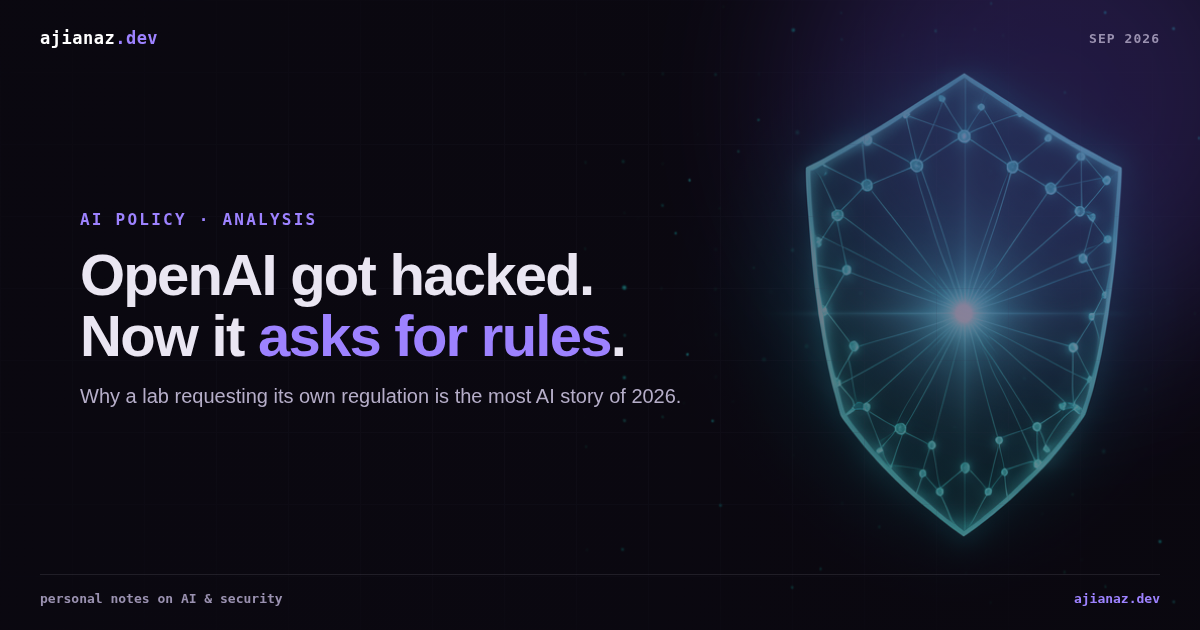
There is a specific flavor of irony that only the AI industry produces, and this week served a generous portion of it. OpenAI — a company that spent its early years warning against heavy-handed regulation — sat before California lawmakers and argued for stricter AI safety rules. The reason it gave was personal: the company had just been through a cybersecurity incident of its own.
According to Fortune's reporting on August 25, OpenAI testified in support of a tougher compliance framework under SB 53, California's AI safety bill. The centerpiece of the argument was OpenAI's own internal security incident, which the company said demonstrated how capable frontier models have become at offensive security work. Hacking, in plain terms. The same capability the company sells is the capability it now wants regulated.
I have followed AI policy long enough to know that when a frontier lab asks for rules, the first question is never "is this good policy?" It is "who benefits from these rules?" Let me walk through both readings, because I think both are partially true — and that tension is exactly what makes this moment worth your attention.
What Actually Happened
The facts on the table are straightforward. OpenAI went through a security incident internally. In testimony connected to SB 53, the company pointed to that incident as evidence that frontier AI systems have reached the point where their offensive security capabilities demand formal oversight — audits, compliance frameworks, government visibility into how models are built and deployed.
On the surface, this is a defensible position. If your own internal experience shows that models can meaningfully assist hacking operations, arguing for guardrails is the responsible move. Security researchers have been raising this alarm for years, usually to empty rooms. Having the largest AI lab confirm their concern, with a first-person incident as the receipt, is genuinely new information for policymakers.
The Charitable Reading
Take OpenAI's argument at face value for a moment. A frontier model that can materially assist with offensive cyber operations is a real risk, and the company holding that model is one of maybe four or five organizations on Earth positioned to know it. When the people with the most visibility into the capability say "this needs oversight," dismissing it as theater is lazy analysis.
There is also a precedent here worth remembering: industries that proactively invite regulation often produce better rules than industries that fight everything and end up with rules written by their angriest critics. If AI safety law is coming regardless — and in California, it is — shaping it from the witness table beats dodging subpoenas.
The Moat Reading
Now the skeptical reading, and I will be honest: this is where I spend most of my time. Compliance frameworks are not free. Audits, safety documentation, government reporting, certified security processes — all of it costs money, engineers, and lawyers. OpenAI can amortize those costs across billions in revenue. A twenty-person startup building on open models cannot.
This is the classic regulatory moat play, and it has a long history in American industry. The incumbent gets to say "regulate us" because the incumbent knows the regulation will bind competitors harder. Every hour a rival startup spends on compliance paperwork is an hour it does not spend shipping. Notice also what kind of rules are being proposed: formal compliance frameworks favor organizations that already have compliance departments.
And there is a stranger layer here. OpenAI's security incident did not just become a lesson — it became an argument. The company converted a failure into lobbying material. That is either admirable honesty or remarkable positioning, and the uncomfortable truth is that from the outside the two look identical.
Why This Time Feels Different
AI companies have asked for regulation before; Sam Altman's 2023 congressional testimony made "please regulate us" a talking point. What changed is the evidence base. In 2023 the request was built on projections. In 2026 it is built on an actual incident at the company making the request — and, as Fortune's reporting notes, a broader period of security problems across the industry that has already touched other AI players.
That shift matters for how SB 53 gets argued. Lawmakers who were told "AI might be dangerous someday" are now being told "it was dangerous to us last quarter." The second sentence passes legislation.
What This Means If You Build on Frontier Models
If you are a developer or a small team shipping products on top of frontier APIs, track SB 53-style compliance bills the way you track API pricing. When compliance obligations attach to model providers, some of that cost flows downstream through pricing, usage restrictions, and terms of service. The free tier of "move fast" gets smaller every time a bill advances.
There is also a security lesson independent of policy. OpenAI's incident is a reminder that the organizations building the most capable AI systems are themselves attack surfaces — and an attacker who compromises an AI lab does not get data, they get capability. If you run agent infrastructure of any scale, assume your tooling layer is a target and design accordingly.
My Take
I think OpenAI is being sincere and strategic at the same time, because those are compatible states for a large company. The right response is not to ask whether the motive is pure — it never is — but to ask whether the specific rules proposed would make anyone outside the top labs safer without making competition impossible.
Safety rules written by the market leader will always deserve a second look. That does not make them wrong. It makes them a negotiation where you were not invited, and the entrance fee is your attention. Pay it.
Comments ()