OpenAI's $1 Trillion IPO Gamble: What the Confidential S-1 Filing Means for the Future of AI
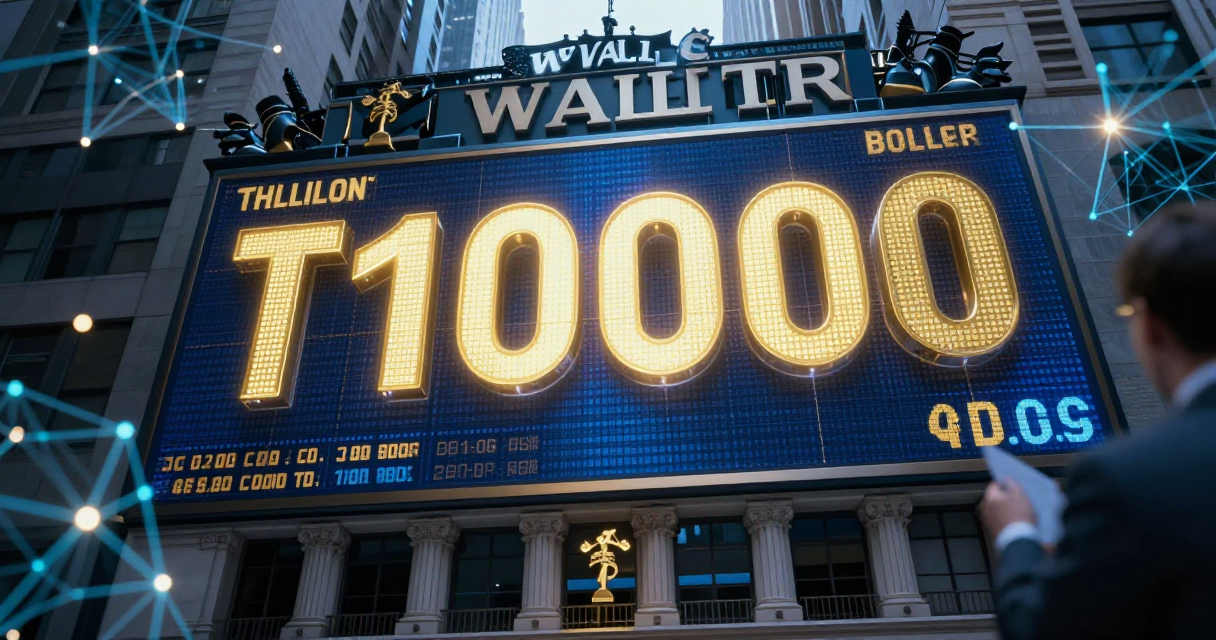
OpenAI has done what every AI company has been quietly preparing for but nobody expected this soon. On May 22, 2026, the company behind ChatGPT confidentially filed its S-1 registration statement with the U.S. Securities and Exchange Commission, kicking off a process that could produce the largest initial public offering in American history. Goldman Sachs and Morgan Stanley are leading the charge, targeting a public debut as early as September 2026 at a valuation above $1 trillion.
But the filing raises more questions than it answers. OpenAI generates roughly $2 billion per month in revenue, yet loses $1.22 for every dollar it earns. The company projects $14 billion in net losses for 2026 and does not expect cash-flow profitability until 2030. A trillion-dollar price tag for a business that has never turned a profit is either the boldest bet in tech history or the clearest sign yet that AI valuations have entered territory entirely disconnected from traditional financial metrics. Both can be true.
What Exactly Is a Confidential S-1 Filing, and Why Does It Matter?
A confidential S-1 filing, formally known as a draft registration statement, is the same document a company submits before going public — but submitted privately to the SEC for review before any financials become public. The mechanism dates back to the JOBS Act of 2012, which initially let "emerging growth companies" file confidentially. In 2017, the SEC expanded the option to virtually all IPO issuers. OpenAI, with its massive revenue, qualifies under the broader 2017 provision.
The practical effect is simple: OpenAI gets months of private SEC review and back-and-forth before competitors, customers, and the press can dissect its audited financials. The catch is that the full S-1 must go public at least 15 days before the company begins its investor roadshow. If September is the target listing date, expect the unredacted financials to surface in August 2026.
For developers and enterprises building on OpenAI's platform, this filing is a signal that the company's risk profile is about to change fundamentally. Public companies operate under quarterly earnings pressure. That pressure reshapes product roadmaps, pricing strategies, and infrastructure investment timelines in ways that private companies can avoid.
What Are the Numbers Behind the $1 Trillion Valuation?
OpenAI's most recent private valuation is concrete. On March 31, 2026, it closed the largest private funding round on record — $122 billion — at an $852 billion post-money valuation. That round was itself an expansion of a financing announced in February 2026 at a $730 billion pre-money valuation. The IPO's reported $1 trillion target would push the company above 40 times its annualized revenue run rate of approximately $24 billion.
The revenue growth is remarkable. OpenAI went from roughly $4 billion in annualized revenue at the end of 2024 to $24-25 billion by early 2026 — a 6x increase in roughly 14 months. Enterprise contracts now drive more than 40% of total revenue, and ChatGPT's newly launched Ads Manager crossed $100 million in annualized revenue within six weeks of deployment. The company has 50 million consumer subscribers and serves 15 billion API tokens per minute.
The loss picture is equally staggering. OpenAI reported $5 billion in net losses for 2024. CMC Markets analysis shows the company lost $1.22 for every $1 of revenue earned in Q1 2026. Internal documents project $14 billion in total net losses for 2026. Sam Altman has outlined plans to invest up to $600 billion in computing infrastructure by 2030, and the company told investors it expects to reach approximately $280 billion in annual revenue by the same year. The gap between where OpenAI is and where it needs to be remains enormous — and that is exactly what public investors will be asked to price.
How Did the Microsoft Partnership Restructure Set the Stage?
The IPO does not happen in a vacuum. On April 27, 2026, Microsoft and OpenAI announced a dramatically restructured partnership that directly enabled the path to public markets. The original deal, under which Microsoft held an exclusive license to OpenAI's models and paid revenue share, was the single biggest constraint on OpenAI's commercial expansion.
Under the new agreement, Microsoft no longer pays revenue share to OpenAI and surrendered its exclusive license rights. In exchange, OpenAI's license to Microsoft is now non-exclusive and runs through 2032, while OpenAI continues paying Microsoft 20% of revenue through 2030 — capped, with the controversial AGI clause removed entirely. The restructuring means OpenAI can now distribute its models and products across AWS, Google Cloud, and any other cloud provider, not just Azure.
Microsoft retains a 26.79% equity stake valued at roughly $228 billion at OpenAI's $852 billion valuation. Azure keeps first-access status for new OpenAI products. But the relationship has shifted from a monopolistic arrangement to a preferred partnership, and that shift is precisely what makes OpenAI's enterprise story investable at scale. Enterprise customers are no longer locked into Azure to access frontier AI capabilities.
What Governance and Legal Risks Remain for Public Investors?
OpenAI's governance structure is unlike anything public market investors typically encounter. The company restructured from a nonprofit capped-profit entity into a Public Benefit Corporation in October 2025, removing the 100x investor return cap that made a public listing legally impractical. But the original nonprofit entity — the OpenAI Foundation — retains roughly 26% equity and, critically, the ability to appoint and remove every board member of the public benefit corporation.
That means a nonprofit foundation controls the governance of what could become a trillion-dollar public company. The tension between a safety-focused mission and shareholder return maximization is not theoretical — it is a structural feature of the entity going public, and public investors will scrutinize every detail of how that tension is managed.
The legal overhang from Elon Musk's lawsuit was materially reduced on May 18, 2026, when a federal jury in Oakland, California, dismissed all claims in under two hours, finding they fell outside a three-year statute of limitations. District Judge Yvonne Gonzalez Rogers adopted the advisory jury's verdict. Musk has vowed to appeal to the Ninth Circuit, calling the decision a "calendar technicality." An ongoing appeal means some uncertainty persists, but the verdict removed the most significant legal obstacle standing between OpenAI and a public listing.
What Does This Mean for Anthropic and the Broader AI Market?
OpenAI is not alone in heading for the public markets. Anthropic, which just closed a $30 billion raise at a $900 billion valuation and reported its first-ever operating profit of $559 million on $10.9 billion in Q2 2026 revenue, is reportedly targeting an October 2026 IPO per Bloomberg reporting. Anthropic has not filed a confidential S-1 as of late May 2026.
If both companies list in the second half of 2026, it will create the first direct public market comparison between the two most important independent AI labs. Anthropic's path to profitability — two years ahead of schedule — contrasts sharply with OpenAI's projected losses through 2028. The market will have to decide whether OpenAI's larger consumer base and broader product portfolio justify its premium valuation relative to Anthropic's leaner, faster path to positive income.
Prediction market Kalshi gave OpenAI an 83% chance of beating Anthropic to public markets after the filing news broke, up from 32% before. The timing also intersects with SpaceX's own IPO — the company confidentially filed on April 1, 2026, targeting roughly $75 billion raised at a $1.75 trillion valuation. Goldman Sachs, Morgan Stanley, and JPMorgan Chase are advising on both deals, creating what Axios described as the most congested IPO calendar the tech sector has ever seen.
What Should Developers and Enterprises Prepare For?
Public company status creates structural incentives that will reshape OpenAI's relationship with its developer and enterprise customers. Quarterly earnings pressure means OpenAI will need to demonstrate consistent revenue growth and progress toward profitability — which translates into concrete expectations for pricing, product bundling, and infrastructure investment.
Analysts have flagged several likely post-IPO developments. Subscription tiers will likely be restructured — potentially adding an ad-supported lower-cost tier and a premium tier with higher usage limits. Enterprise discounts may shrink as the company optimizes margins for public reporting. The free tier may receive fewer aggressive feature updates as resources shift toward revenue-generating products. None of this is confirmed, but the pattern is consistent across every major SaaS company that has gone public.
For teams running production workloads on the OpenAI API, the practical advice is straightforward: if you have not already locked in multi-year enterprise contracts, the window to negotiate pre-IPO terms is narrowing. Once the S-1 goes public and roadshow begins, OpenAI's pricing leverage increases significantly. The restructuring of the Microsoft deal means you are no longer locked to Azure, which gives you more negotiating flexibility — but also means OpenAI will be more aggressive about pursuing direct enterprise contracts across all cloud platforms.
What Happens Next?
The confidential filing kicks off a months-long sequence. The SEC will review the draft registration statement privately and send comments — a back-and-forth process that typically runs for two to three months. When OpenAI is ready, it publishes the full S-1 at least 15 days before the investor roadshow begins. Management pitches institutional investors during the roadshow, bankers set a price, and shares begin trading.
The timeline is not guaranteed. Market volatility, regulatory friction, a cooling of investor sentiment toward AI stocks, or complications from Musk's appeal could push the listing into 2027. But the filing itself is the clearest signal yet that OpenAI intends to test whether public investors will pay private-market prices for the most consequential AI company in the world.
The question is not whether OpenAI goes public — it is whether a company that generates $2 billion per month while losing $1.22 on every dollar earned can convince public markets that the path to $280 billion in annual revenue by 2030 is credible enough to justify a starting price of $1 trillion. We will find out in the second half of 2026.
Comments ()