When AI Becomes Both Weapon and Fortress: Glasswing, Gogs Zero-Day, and Copilot's Desktop Revolution
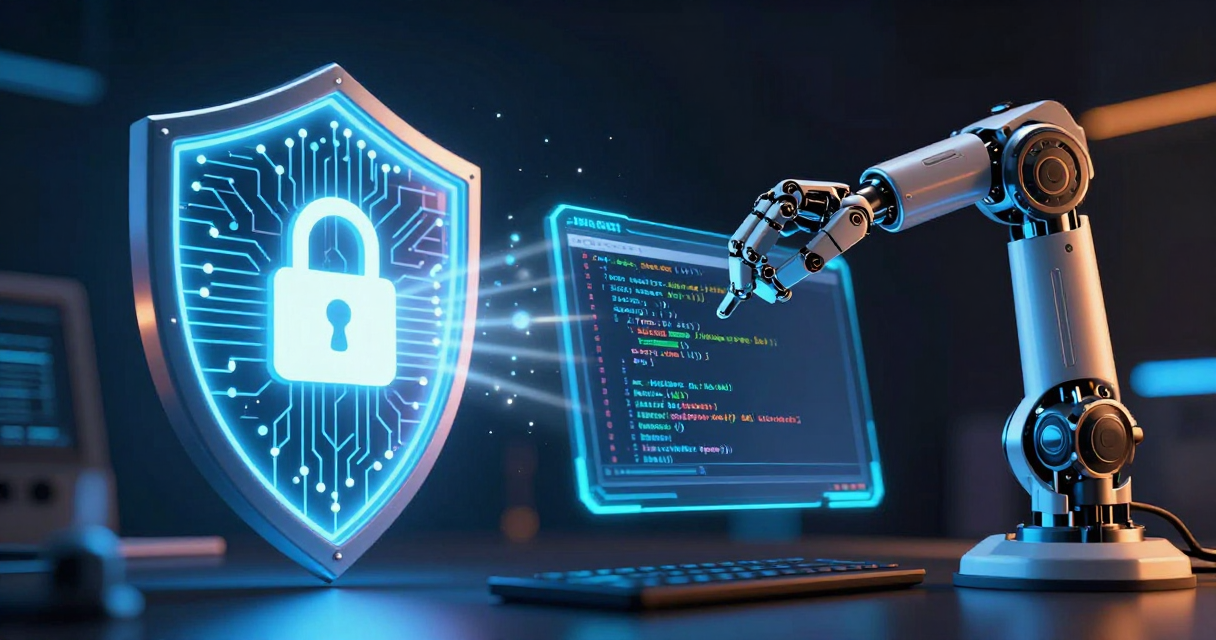
This week delivered a stark reminder that artificial intelligence is no longer just a tool — it has become both the weapon and the shield in the ongoing battle for digital security. From Anthropic assembling a coalition of tech giants to defend against AI-generated exploits, to a critical zero-day in one of the internet's most widely used self-hosted Git platforms, the stories below reveal an industry at an inflection point. Let's dig into the five stories that defined this stretch.
Project Glasswing: Anthropic Brings Tech Giants Together to Defend Against AI-Powered Cyber Threats
Anthropic announced Project Glasswing, a sweeping cybersecurity initiative that reads less like a product launch and more like an industry-wide call to arms. The coalition includes Amazon Web Services, Apple, Broadcom, Cisco, CrowdStrike, Google, JPMorganChase, the Linux Foundation, Microsoft, NVIDIA, and Palo Alto Networks — a who's who of companies that collectively control the backbone of modern digital infrastructure.
The catalyst is Claude Mythos Preview, an unreleased Anthropic frontier model that the company claims has already discovered thousands of high-severity vulnerabilities across every major operating system and web browser. Anthropic describes the situation in blunt terms: AI models have reached a level of coding capability where they can surpass all but the most skilled humans at finding and exploiting software vulnerabilities. The company is committing up to $100 million in usage credits for Mythos Preview across partner organizations, plus $4 million in direct donations to open-source security projects.
This creates a paradox that the cybersecurity world has been anticipating for years. The same AI capabilities that enable autonomous vulnerability discovery can, in the wrong hands, fuel a new generation of sophisticated attacks. As explored in our previous coverage of the AI cybersecurity threshold, models like Claude Mythos and GPT-5.5-Cyber have already changed the calculus of offensive security. Project Glasswing is Anthropic's attempt to ensure that defensive capabilities scale faster than offensive ones — by giving the good guys the most powerful tools first.
For enterprises, the implication is clear: the era of relying solely on traditional vulnerability scanners and manual penetration testing is entering its twilight. AI-powered security auditing is becoming a competitive necessity, and Glasswing's structure suggests it will be available through established enterprise relationships rather than as a standalone product.
Gogs Zero-Day: Critical RCE Vulnerability Leaves Self-Hosted Git Servers Exposed
While Anthropic works on AI-driven defense, a more traditional but no less dangerous vulnerability has surfaced in Gogs, the lightweight self-hosted Git service used by thousands of organizations as an alternative to GitHub Enterprise and GitLab. Discovered by Rapid7 senior security researcher Jonah Burgess, the flaw is an argument injection vulnerability that enables remote code execution (RCE) on internet-facing instances.
The attack vector exploits Gogs' "Rebase before merging" feature through pull requests with specially crafted branch names that inject --exec flags into the underlying git rebase command. What makes this particularly concerning is the default configuration of Gogs: the service ships with open registration enabled and no limit on repository creation, meaning any unauthenticated attacker can create an account, set up a repository, and execute the exploit without any admin intervention.
A successful exploitation gives attackers access to all repositories on the instance, including private ones — enabling theft of source code, credentials, SSH keys, and 2FA secrets. It also opens the door for lateral movement across the broader network. As of this writing, there is no official patch available, and the vulnerability affects all current release versions (0.14.2 and 0.15.0+dev).
This is a textbook example of why supply chain security extends beyond npm packages. Organizations that chose Gogs for its simplicity and self-hosted control may now be exposed precisely because of those defaults. The immediate mitigation is to disable open registration and restrict repository creation, but the lack of a CVE assignment and official patch means the window of risk remains wide open.
GitHub Copilot Gets Its Own Desktop App With Agentic Merge Capabilities
Microsoft launched a technical preview of GitHub Copilot as a standalone desktop application available for macOS, Windows, and Linux — a significant step that moves AI coding assistance beyond the IDE. The desktop app introduces Agent Merge, a feature that can autonomously handle code review comments, fix CI failures, resolve merge conflicts, and complete the entire pull request lifecycle while respecting branch protection rules.
Each session runs in an isolated git work tree, allowing multiple agent sessions to operate in parallel without conflicts. The workflow chain is compelling: developers describe a task or point to a GitHub issue, and the agent handles everything from implementation through review to merge — no IDE context required. Access is currently limited to Copilot Pro and Pro+ subscribers through a waitlist, with gradual rollout planned for Business and Enterprise tiers.
This represents an evolution in the agentic coding landscape. While multi-agent orchestration has been reshaping AI workflows, GitHub Copilot's desktop approach simplifies the model: rather than orchestrating multiple specialized agents, it wraps the entire development workflow into a single coherent experience. For teams already invested in the GitHub ecosystem, the friction of adoption is minimal — the agent operates within the same permissions model, PR workflows, and CI/CD pipelines that developers already use daily.
The strategic implication is equally important. By making Copilot an independent desktop application, Microsoft is positioning it as a platform rather than a plugin. This opens the door for deeper integrations with project management tools, documentation systems, and DevOps pipelines — essentially turning Copilot from a coding assistant into a development operations hub.
DTCC Chooses Stellar for Tokenized Wall Street Assets in a Boost for Blockchain Infrastructure
In one of the most significant endorsements of blockchain technology by traditional finance, the Depository Trust & Clearing Corporation (DTCC) — the infrastructure backbone that processes trillions of dollars in U.S. securities annually — announced plans to bring tokenized assets to the Stellar network in the first half of 2027. The scope includes tokenized stocks, ETFs, and Treasuries currently custodied by DTCC's subsidiary, the National Securities Clearing Corporation.
The market reaction was immediate and dramatic: Stellar's native token XLM surged over 40% within days of the announcement, breaking its correlation with broader crypto market weakness. On-chain metrics showed daily operations on the Stellar network jumping past 20 million, signaling genuine utility adoption rather than speculative trading. For context, DTCC settles virtually all U.S. equities, corporate and municipal bonds, and mortgage-backed securities — its involvement in blockchain-based settlement is a fundamental signal to the industry.
This move fits into the broader real-world asset tokenization narrative that has been gaining momentum throughout 2026. While crypto spot prices have struggled — Bitcoin ETFs recorded nine consecutive days of outflow totaling $2.84 billion — institutional capital has been flowing toward infrastructure that bridges traditional finance and blockchain. DTCC's choice of Stellar over competing networks like Ethereum or Solana for this specific use case suggests that settlement speed, cost efficiency, and regulatory alignment were decisive factors.
Kimwolf Botnet Takedown: The 30 Tbps DDoS Operator Who Targeted the Pentagon
Canadian authorities arrested Jacob Butler, a 23-year-old from Ottawa, who is alleged to be the operator of the Kimwolf IoT botnet — a network that infected millions of devices over six months and was capable of generating nearly 30 Terabits per second in distributed denial-of-service attacks. The botnet targeted devices typically considered safe behind firewalls, including digital photo frames and web cameras, exploiting default credentials and outdated firmware to build its army.
The scale of the infrastructure is staggering. At nearly 30 Tbps, Kimwolf's attack capacity rivaled the largest DDoS events ever recorded, and the botnet's targets included IP addresses belonging to the U.S. Department of Defense. The financial damage exceeded $1 million across multiple victims. Butler now faces criminal charges in both Canada and the United States, with investigations involving the Defense Criminal Investigative Service.
This case highlights a critical vulnerability in the IoT ecosystem that remains largely unaddressed. While enterprise security has evolved significantly — as evidenced by the AI agent security crisis that dominated earlier discussions — consumer IoT devices continue to operate with minimal security standards. Digital photo frames and webcams are never updated, rarely monitored, and often exposed to the internet through UPnP or port forwarding by users who have no idea of the risk. The Kimwolf takedown is a win for law enforcement, but the underlying conditions that made such a botnet possible remain untouched.
What Ties These Stories Together
Look across all five stories and a pattern emerges: the boundaries between AI, cybersecurity, and development infrastructure are dissolving. Anthropic's Glasswing project uses AI to find vulnerabilities that human auditors miss. The Gogs zero-day shows those vulnerabilities still exist in the tools developers trust daily. GitHub Copilot's new desktop app promises to automate the entire development workflow — but also expands the attack surface for AI-specific threats. DTCC's move to Stellar represents the financial industry's bet that blockchain infrastructure can handle settlement at scale. And the Kimwolf takedown is a reminder that the most dangerous botnets don't need sophisticated zero-days — they just need millions of neglected IoT devices with default passwords.
The common thread is infrastructure. Whether it's the AI models that audit code, the Git servers that store it, the settlement systems that move money, or the IoT devices that fill our homes and offices, the security of each depends on the integrity of all. This isn't a new insight, but the velocity of change in 2026 — AI capabilities scaling exponentially, blockchain achieving institutional adoption, autonomous coding agents moving from experiments to production — means the cost of getting infrastructure wrong has never been higher.
Comments ()