$1.25 Billion a Month: Inside the Anthropic-SpaceX Compute Deal Reshaping AI Infrastructure
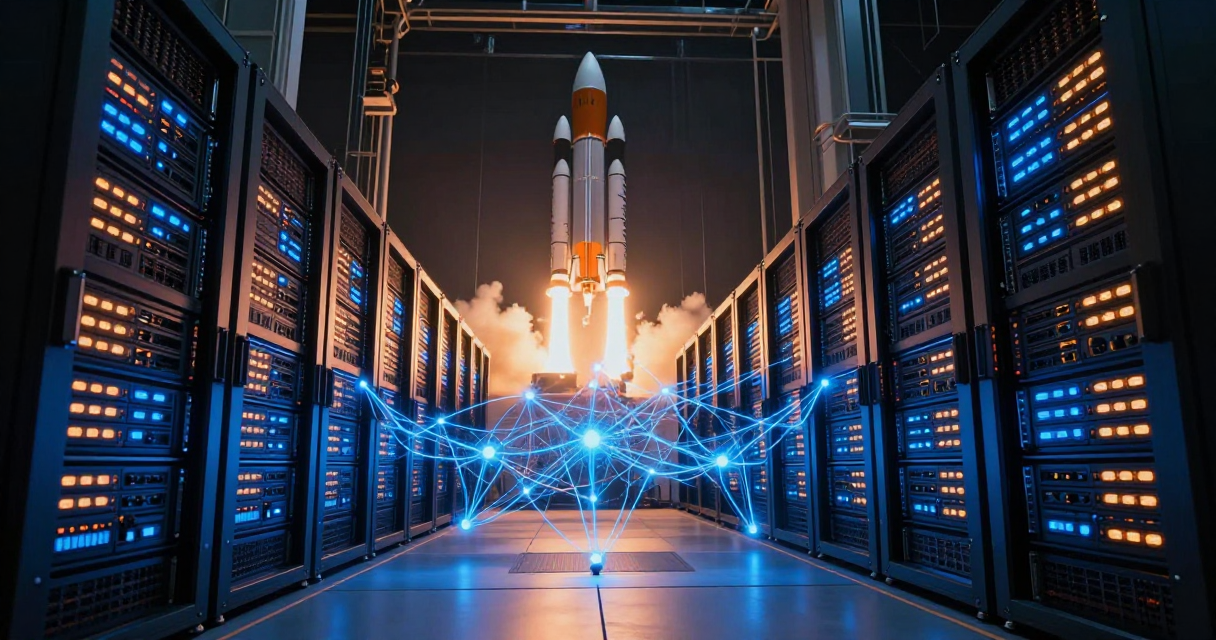
In the most unusual infrastructure partnership the AI industry has seen, Anthropic — the company behind Claude — agreed to pay Elon Musk's SpaceX $1.25 billion per month for access to the Colossus supercomputer cluster in Memphis, Tennessee. The figure, disclosed in SpaceX's S-1 IPO filing, represents a three-year commitment worth more than $40 billion and signals a fundamental shift in how AI companies are securing the compute power they need to survive.
This isn't a traditional cloud contract. Anthropic is renting capacity from infrastructure owned by a rival AI company — SpaceX acquired xAI earlier this year — because the alternative was watching its growth stall. The deal exposes both the astronomical scale of AI compute demand and the increasingly blurred lines between competitors in the race to build artificial general intelligence.
How Did Anthropic End Up Paying Its Rival for Compute?
The deal was announced by Anthropic on May 6, timed to coincide with its annual developer conference in San Francisco. Anthropic's compute chief, Tom Brown, framed it as a strategic expansion that would immediately increase Claude API rate limits and unlock higher capacity for Claude Pro and Claude Max subscribers. The same-day service changes were deliberate — Anthropic wanted developers to feel the impact immediately, not months down the road.
But the financial details remained under wraps until SpaceX filed its S-1 registration statement with the SEC. The filing revealed that Anthropic pays a discounted rate for the initial months while xAI finishes ramping up capacity, with the full $1.25 billion monthly rate applying through the contract's end. Either party can terminate with 90 days' notice.
SpaceX describes the arrangement candidly: it allows the company to "monetize unused compute capacity in our infrastructure." Translation — xAI's Grok assistant hasn't consumed enough of the Colossus cluster to justify its full capacity, so Anthropic is effectively subsidizing the gap. The S-1 confirms SpaceX expects "to enter into additional similar services contracts," positioning Anthropic's deal as a template rather than a one-off.
The infrastructure in question is substantial. Colossus 1 houses more than 220,000 NVIDIA GPUs, including H100, H200, and the newer GB200 accelerators. Anthropic will also get access to the newer Colossus 2 facility, with Brown noting the company would be "scaling up on Nvidia GB200 capacity in Colossus 2 throughout June."
Why Is Compute the Bottleneck That Justifies $15 Billion a Year?
Anthropic's revenue run rate has exploded from approximately $1 billion in annual recurring revenue in late 2024 to around $14 billion by early 2026. Claude Code alone — Anthropic's agentic coding tool that only launched publicly in May 2025 — now generates over $2.5 billion in annualized revenue, having more than doubled since January. Four percent of all public GitHub commits are now authored by Claude Code, with projections exceeding 20 percent by the end of 2026.
The company counts eight of the Fortune 10 among its customers. Enterprise customers now represent more than half of Claude Code revenue, and 79 percent of OpenAI's paying customers also pay for Anthropic. This isn't a zero-sum market — enterprises are buying both, which means demand for Anthropic's inference capacity is compounding.
But demand has outstripped supply. Anthropic has been constrained not by its ability to sell Claude, but by the physical infrastructure needed to serve it. The Colossus deal isn't about buying convenience — it's about buying survival at scale. At an annualized run rate of $15 billion, the compute cost represents a significant fraction of Anthropic's revenue, but it's the price of not losing customers to competitors who have the capacity Anthropic lacks.
What Does This Mean for the AI Infrastructure Market?
The Anthropic-SpaceX deal establishes a new benchmark for large-scale compute pricing. When the world's fastest-growing AI company commits to $1.25 billion per month for inference capacity, that number becomes the reference point for every future negotiation between AI labs and infrastructure providers.
It also validates a model that most infrastructure players haven't embraced: building compute capacity for both internal use and external rental simultaneously. xAI built Colossus for Grok but is now functioning as a cloud computing provider for Anthropic. SpaceX's S-1 describes this as a "dual monetization strategy" that "provides multiple pathways to generate returns on invested capital."
This is a departure from the traditional data center model, where companies like Amazon Web Services, Google Cloud, and Microsoft Azure build generic capacity and rent it to all comers. In the new model, AI companies are building specialized GPU clusters and selectively renting unused portions to other AI companies — a more efficient approach that avoids the overhead of a full-scale cloud platform but creates awkward competitive dynamics.
SpaceX's own finances illustrate the cost side of this equation. The S-1 reveals that SpaceX's AI-related losses from operations ballooned fourfold last year to more than $6 billion, driven by GPU procurement costs and depreciation. For the first quarter of 2026 alone, those losses exceeded $2.5 billion. The filing even lists "manufacturing our own GPUs" as a planned capital expenditure — a direct challenge to Nvidia's dominance in the AI chip market.
What Are the Risks for Both Parties?
The 90-day termination clause is the deal's most significant vulnerability. For Anthropic, depending on a competitor's infrastructure for core inference workloads creates strategic risk — xAI could theoretically prioritize its own needs during peak periods or withdraw capacity entirely with relatively short notice. Anthropic would need to scramble for replacement compute, and at $1.25 billion per month, there aren't many alternative providers with that much capacity available.
For SpaceX, the Anthropic contract is a pillar of its IPO narrative. The company is reportedly targeting a June listing on Nasdaq under the ticker SPCX, with an IPO valuation of approximately $1.75 trillion. The $15 billion in annual Anthropic revenue provides a visible, contract-backed income stream for IPO investors — but it's also a reminder that xAI built more capacity than its own products currently need. If Anthropic exercises its termination right, SpaceX loses a major revenue line at a time when AI losses are already mounting.
The deal also raises questions about Anthropic's broader infrastructure strategy. The company has been pursuing multiple compute channels simultaneously — including reported talks with UK startup Fractile for custom AI inference chips. Diversifying supply is prudent, but the SpaceX deal's sheer scale means Anthropic is now deeply entangled with a rival's infrastructure for at least several years.
The Bigger Picture: AI Compute Is the New Oil
The Anthropic-SpaceX deal is more than a commercial arrangement — it's a symptom of the central tension in the AI industry. Every major lab is racing to acquire more compute, but the capital requirements are so enormous that even the best-funded companies are being forced into unconventional partnerships.
Anthropic has raised approximately $64 billion in total funding since its founding in 2021 and is valued at hundreds of billions of dollars. Yet it still needs to rent compute from a competitor because building sufficient capacity from scratch would take years and cost even more. OpenAI, valued at roughly $852 billion after its most recent funding round, faces the same pressure — the company has reportedly committed $1.4 trillion to data center infrastructure over the next seven to eight years.
The SpaceX deal also reveals something important about the competitive dynamics. Anthropic chose capacity over competitive purity. Buying from xAI/SpaceX wasn't the strategically clean option, but it was the fastest path to the GPU hours Anthropic needed. In a market where inference capacity is the gating factor for revenue growth, speed trumps elegance.
SpaceX's orbital compute ambitions add another dimension. The S-1 and partnership terms include provisions for "multiple gigawatts of orbital AI compute capacity" — a reference to SpaceX's satellite-based data center plans that are already in a regulatory fight with the FCC. While no deployment timeline has been disclosed, Anthropic's expression of interest suggests that space-based compute isn't science fiction anymore; it's part of the planning horizon for serious AI companies.
What Should Developers and Enterprises Take Away?
For developers building on Claude, the immediate impact is positive: higher rate limits and more reliable capacity. Anthropic tied the SpaceX deal directly to same-day service improvements, which means the compute expansion isn't just a backend procurement story — it's already visible in API performance.
For enterprises evaluating AI infrastructure strategies, the deal offers three lessons. First, compute scarcity is real and will persist for years. Companies that lock in capacity early will have a structural advantage. Second, the definition of "infrastructure provider" is expanding — your compute partner might also be your competitor, and that's increasingly acceptable. Third, the economics of AI inference at scale are staggering. When a single customer is paying $15 billion annually for compute, the unit economics of AI-powered products need to generate extraordinary value to justify the cost.
The Anthropic-SpaceX deal is a contract, but it's also a signal. It tells us that the AI industry has entered a phase where infrastructure access matters more than algorithmic differentiation, where competitors become business partners out of necessity, and where the companies that control GPU capacity wield the same strategic influence that energy companies once held in the industrial economy. The question isn't whether more deals like this will happen — it's who will strike the next one.
Sources:
- Business Insider — Anthropic Is Paying SpaceX $1.25 Billion a Month for AI Compute
- WinBuzzer — Anthropic Taps SpaceX Compute as Claude Adjusts Some Usage Limits
- TOP1 Markets — Anthropic Pays SpaceX $1.25B Per Month for Colossus Compute Access
- SaaStr — Anthropic Just Hit $14 Billion in ARR
- The Motley Fool — OpenAI Could Confidentially File for an IPO


Comments ()