LM Studio 0.4 Just Killed the Cloud AI Game: Parallel Processing and Headless Deployment Are Here
Remember when running AI models locally meant choosing between a clunky command-line interface or a pretty-but-limited GUI? Yeah, those dark ages are officially over. LM Studio just dropped version 0.4.0, and it's not just an update—it's a paradigm shift that makes cloud-based AI look increasingly unnecessary for most use cases.
The Parallel Processing Revolution We've Been Waiting For
Let's address the elephant in the room: LM Studio 0.4.0 finally brings parallel request processing to local AI. Gone are the days when your local LLM would process requests one at a time like a bored toll booth operator. Thanks to llama.cpp 2.0.0's continuous batching implementation, LM Studio can now handle multiple concurrent requests simultaneously.
Image source: LM Studio Official Blog
This isn't just a nice-to-have feature—it's fundamental for anyone serious about agentic AI workflows, coding agents, or any application that needs to fire off multiple requests in parallel. As AI with Eric demonstrated in his recent testing, firing off 10 simultaneous requests is now possible, with the model processing them in batches rather than queuing them up like customers at a slow coffee shop.
The new "Max Concurrent Predictions" setting lets you define exactly how many simultaneous requests your model can handle, while "Unified KV Cache" (enabled by default) ensures memory is allocated dynamically rather than hard-partitioned per request. In other words, you're getting higher throughput without blowing up your memory requirements.
Headless Deployment: LM Studio Finally Grows Up
Perhaps the most significant architectural change in 0.4.0 is the introduction of "llmster"—the core of LM Studio, now decoupled from the GUI and packaged as a standalone daemon. This means you can deploy LM Studio on servers, cloud instances, GPU rigs, or even Google Colab without any graphical interface whatsoever.
This is LM Studio's coming-out party as a serious infrastructure player, not just a pretty desktop app. Installation is refreshingly simple: a single curl or PowerShell command and you're ready to serve models in headless environments. For DevOps engineers and anyone running CI/CD pipelines, this is game-changing.
A Stateful API That Actually Makes Sense
LM Studio 0.4.0 introduces a new /v1/chat REST API endpoint that's stateful rather than stateless. What does that mean in plain English? Instead of sending the entire conversation context with every request, you get a response_id and can continue conversations by passing previous_response_id in subsequent requests.
This approach keeps requests smaller, enables cleaner multi-step workflows, and provides detailed statistics like token throughput, time-to-first-token, and inference duration. It's the kind of API design that makes developers feel like someone actually understands their workflow.
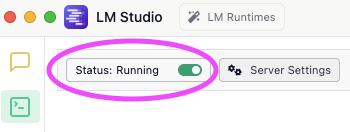
Image source: LM Studio Official Blog
The Bigger Picture: Local AI is No Longer a Compromise
This isn't happening in a vacuum. The broader trend shows local AI maturing rapidly. Yuvarrunjitha over at Yuvz notes that 2026 has quietly made local LLM deployment "one-click simple." The combination of automatic CPU/GPU detection, OpenAI-compatible endpoints, and offline-first execution means you can prototype, test, and ship AI features entirely on your own machine.
The quantization revolution—formats like MXFP4, INT4/INT8, and modern GGUF builds—means 100B+ parameter models can run on consumer GPUs and even high-RAM laptops. This isn't theoretical anymore; it's practical, cost-effective, and increasingly performant.
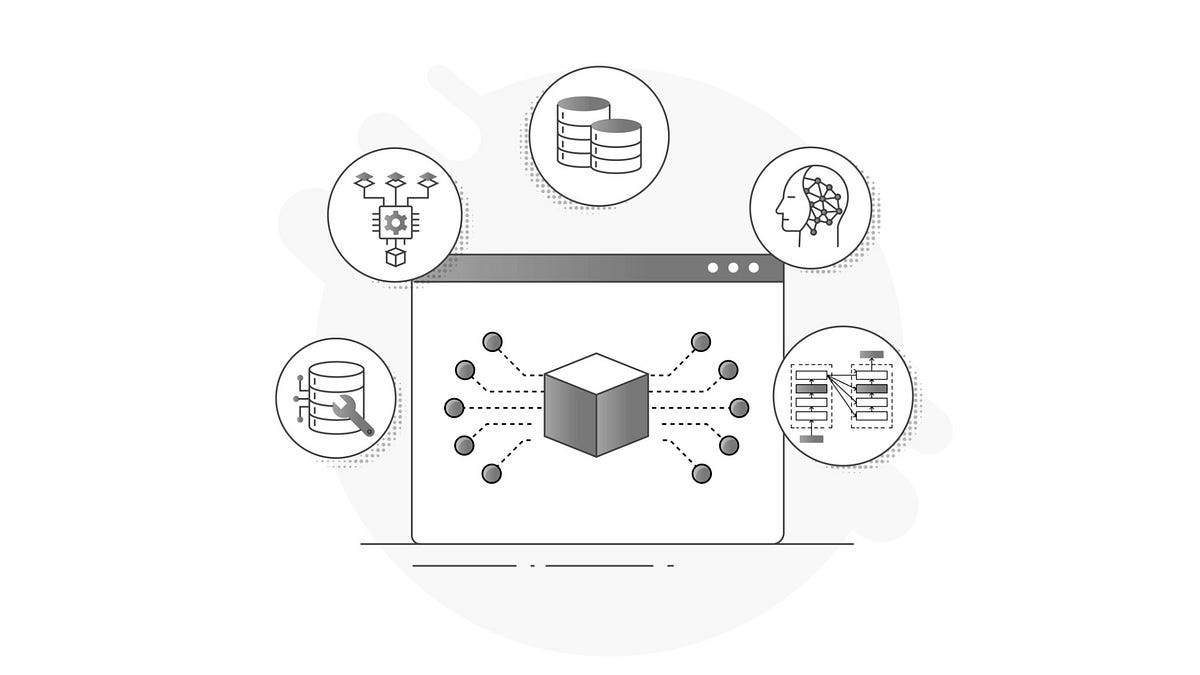
Image source: Yuvz on Substack
What This Means for You
If you're a developer, this is your invitation to stop paying for API keys. LM Studio exposes a local endpoint at http://localhost:1234/v1/chat/completions, meaning your React apps, Flask/FastAPI backends, and hackathon demos can all be powered by local AI with zero API costs. No token anxiety, no usage limits, no surprise bills.
If you care about privacy (and you should), this is huge. Your prompts stay on your device—ideal for academic work, research experiments, internal tools, and sensitive datasets. For companies worried about proprietary data leaving their network, local hosting provides capabilities that cloud services literally cannot match.
The Bottom Line
LM Studio 0.4.0 represents the moment local AI crossed the threshold from "interesting alternative" to "legitimate production solution." Between parallel processing, headless deployment, and a stateful API that actually respects developer workflows, the cloud's main advantages are shrinking fast.
Sure, cloud models still have their place for very large repositories or multi-hour refactoring sessions. But for most use cases? The math is getting harder to ignore. Why rent your intelligence when you can own the engine?
Sources
- LM Studio Official Blog - Introducing LM Studio 0.4.0
- LM Studio Official Blog - Open Responses with local models
- AI with Eric - LM Studio 0.4.0 just changed the local AI game forever (YouTube)
- Yuvz - Local LLM deployment is now one-click workflow: Ollama & LM Studio
- Cline Blog - Cline + LM Studio: the local coding stack with Qwen3 Coder 30B
- Alternativeto.net - LM Studio 0.4 adds parallel model requests
- Blog Nouvelles Technologies - LM Studio 0.4.0 : l'app "ChatGPT local" se réinvente
- Freeware-Base - LM Studio 0.4.0: Server-Deployment & Parallel Inference
- LuckyWhite - 【LM Studio 0.4.0】ローカルAIの常識が変わる
- KITPA - LM Studio 0.4.0 公開...서버 배포와 병렬 처리 지원



Comments ()