Hybrid Cloud: The Only Thing Still Keeping Your Cloud Bill From Bankrupting You in 2026
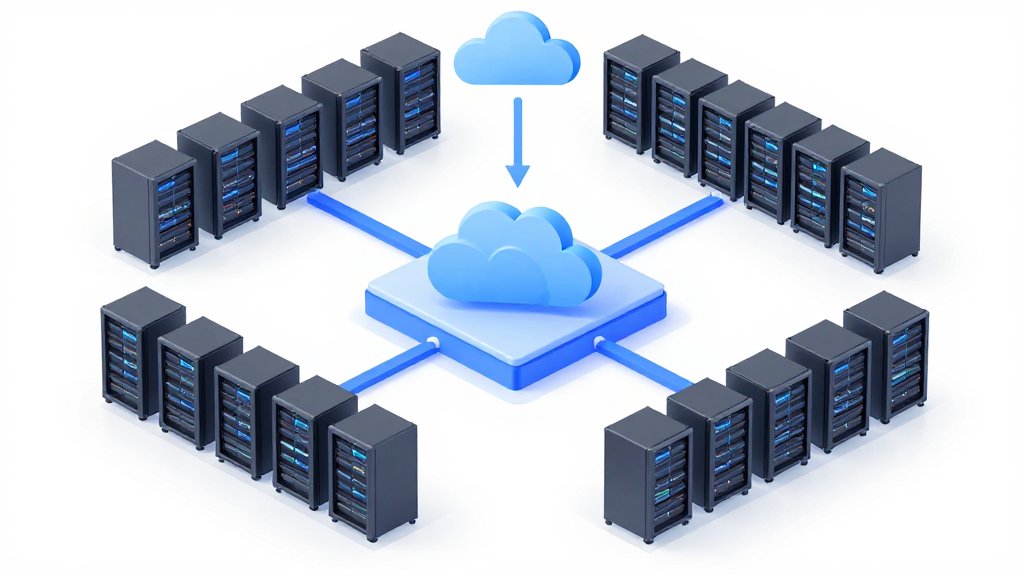
Remember the good old days when "cloud-first" was the corporate mantra of choice? Those naive, innocent times when CIOs proudly declared they were moving everything to the cloud, consequences be damned? Yeah, me neither. Because apparently, someone finally looked at the quarterly cloud bill and had an epiphany that would make a sober accountant weep: hybrid cloud isn't just a strategy anymore—it's survival.
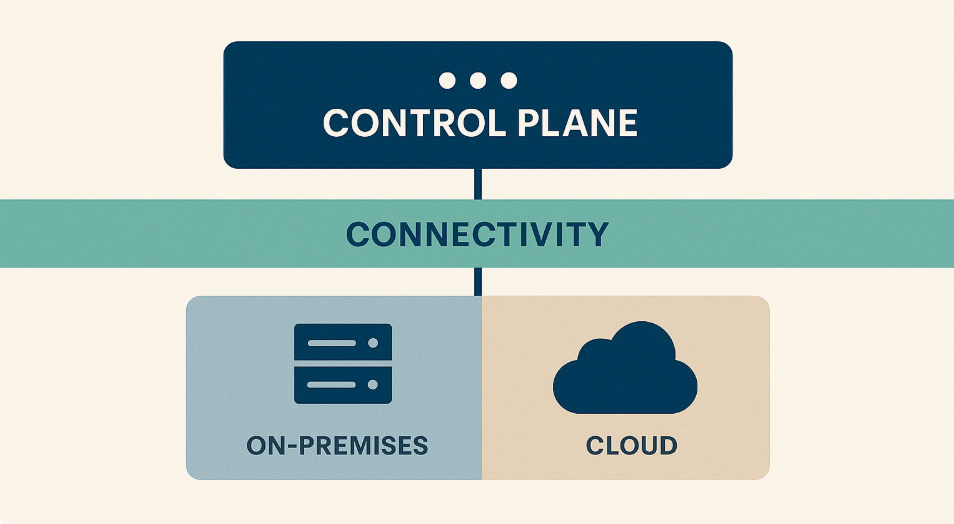
Image credit: Airbyte
Here's the brutal reality nobody wanted to admit during the cloud migration frenzy: pure cloud strategies don't work for most enterprises. Shocking, I know. Turns out that investing millions in perfectly functional on-premises hardware just to abandon it for a pay-as-you-go model that spirals out of control isn't exactly what the shareholders signed up for. Who could have predicted that?
The recent shift to hybrid and multicloud architectures isn't driven by some sudden philosophical awakening—it's driven by cold, hard necessity. Organizations are finally realizing that they need to place workloads where they actually make sense, not where some consultant's slide deck said they should go. Your latency-sensitive trading systems? On bare metal. Your customer analytics? In the cloud. Your sensitive financial data that regulators will roast you over if it crosses borders? Staying exactly where it is, thank you very much.
What's particularly entertaining is watching the hyperscalers suddenly pivot from "all-in on our cloud" to "hybrid is the future" without even blushing. Red Hat just announced support for the AWS European Sovereign Cloud—because apparently European organizations in highly regulated sectors like finance and healthcare were facing that persistent challenge of balancing rapid innovation with strict digital sovereignty. Who could have seen that coming? Oh right, everyone except the people selling pure cloud solutions.
Volante Technologies dropped a particularly spicy bombshell with their new Multi-Cloud Resiliency Service, engineered to keep financial institutions' payment operations running during major cloud provider outages. Because here's a fun thought experiment: what happens when your entire payment processing is on a single cloud provider and that provider has an outage? Spoiler: you lose money faster than a crypto influencer in a bear market. Volante's solution provides "true cross-cloud continuity," which is corporate speak for "we learned the hard way that single points of failure are expensive."

Image credit: Google Cloud
The architecture that's emerging is actually pretty elegant when you step back from the vendor marketing noise. Modern hybrid deployment separates cloud-based control planes from customer-controlled data planes. The control plane handles orchestration, monitoring, and upgrades, while your data plane runs inside your VPC or on-premises cluster. You get cloud-managed ease while maintaining custody of your actual data—the best of both worlds without the usual compromise of choosing between "convenient but expensive" or "cheap but a nightmare to manage."
What's particularly telling is the rising interest in cloud and AI sovereignty that Microsoft's CEO Satya Nadella recently highlighted. Analysts are warning this could lead to more selective enterprise buying patterns—which is a polite way of saying companies are done with writing blank checks to cloud providers who treat data residency requirements like suggestions rather than laws. IBM and SAP are both pushing sovereignty platforms, AWS launched their European Sovereign Cloud, and suddenly everyone remembers that compliance is a feature, not a bug.
The efficiency gains are becoming too significant to ignore. Google Cloud claims their Anthos platform increases platform operations efficiency by up to 55%. Nutanix expanded capabilities to help customers build and operate distributed sovereign clouds. VAST Data partnered with Google Cloud to enable enterprise AI at scale across hybrid environments. The common thread? Organizations are optimizing their infrastructure like they actually care about ROI—because after years of unchecked cloud spend, CFOs finally got involved.
Let's be real about what's actually happening here: hybrid cloud is the infrastructure strategy that acknowledges business reality instead of trying to impose some cloud purist ideology on it. Regulations exist, latency matters, different workloads have different requirements, and money remains a consideration even for companies that act like it doesn't. The enterprises that succeed with hybrid cloud won't be the ones with the fanciest tech stack—they'll be the ones with coherent governance frameworks that know where to place what workload and why.
Because at the end of the day, the question isn't whether you should go hybrid. The question is how much pain you're willing to endure before you admit that your pure cloud strategy was about as sustainable as your cryptocurrency dreams from 2021.
Comments ()