DLSS 4, FSR 4, and the AI GPU Revolution: How Neural Rendering Is Reshaping PC Gaming in 2026
AI-powered graphics have won. DLSS 4's Multi Frame Generation and AMD's FSR 4 are using neural networks to create frames that don't exist — and PC gaming will never be the same.
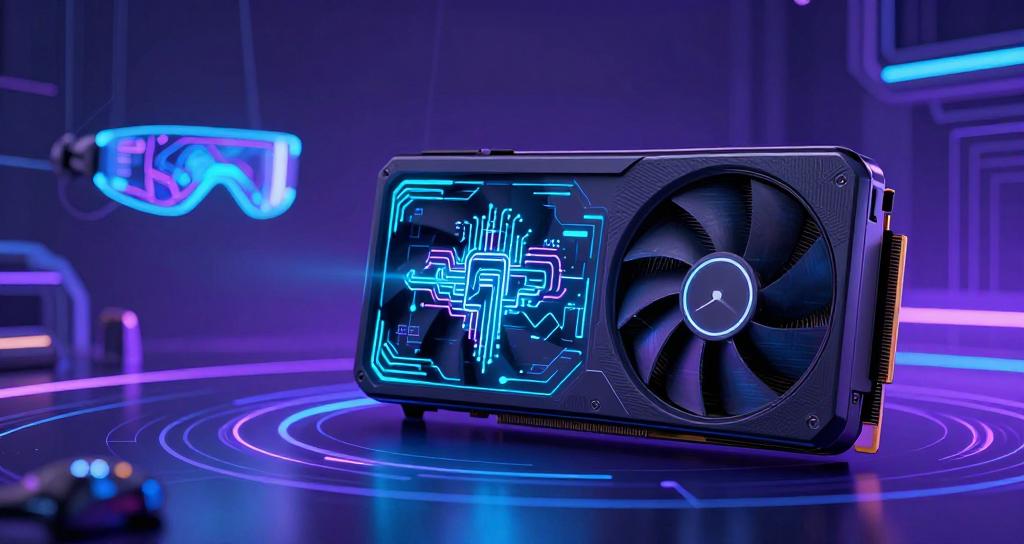
Your GPU Is Now an AI Factory — and Gaming Will Never Be the Same
The battle for the future of PC graphics is no longer about raw rasterization performance — it's about AI. NVIDIA's DLSS 4 with Multi Frame Generation, AMD's FSR 4 with machine learning upscaling, and Intel's XeSS 2 have collectively redefined what's possible in real-time rendering. In 2026, the question isn't whether AI-enhanced graphics are good enough for gaming; it's whether traditional rendering can survive at all.
DLSS 4: Generating Frames That Don't Exist
NVIDIA's DLSS 4 represents the most aggressive use of AI in real-time graphics to date. Its Multi Frame Generation technology doesn't just upscale existing frames — it generates entirely new frames from intermediate motion data, effectively multiplying your frame rate by up to 4x. The result is that a GPU rendering 30 native frames per second can output a perceived 120 FPS experience. The neural network analyzes motion vectors, depth information, and scene context to create frames that are often indistinguishable from natively rendered ones.
The implications are staggering. Games that would have been unplayable on mid-range hardware are suddenly smooth. Ray tracing — historically the biggest performance tax in gaming — becomes viable without needing a $2,000 GPU. NVIDIA is essentially using AI to democratize high-end gaming experiences.
FSR 4 and the Open Alternative
AMD's FSR 4 takes a different approach. Rather than relying on proprietary tensor cores, FSR 4 uses a machine learning model that runs on standard compute units, making it available across a much wider range of hardware — including AMD's own APUs and even some integrated graphics solutions. While the raw quality still trails DLSS 4 in most head-to-head comparisons, the accessibility advantage is significant. FSR 4 works on virtually any modern GPU, including NVIDIA's and Intel's.
The Bigger Picture
What's happening in gaming graphics is a preview of what's coming to every visual medium. AI-powered rendering is proving that neural networks can create visual content that humans can't distinguish from "real" rendering. As these techniques mature and become more efficient, we'll see them expand beyond gaming into film production, architectural visualization, medical imaging, and virtual reality. The GPU, once a simple graphics accelerator, has become the most important chip in the AI revolution — and gaming is its proving ground.
Sources: Newegg Insider



Comments ()