Climate Tech Market Soars to $218B by 2033: Is the Green Revolution Finally For Real?
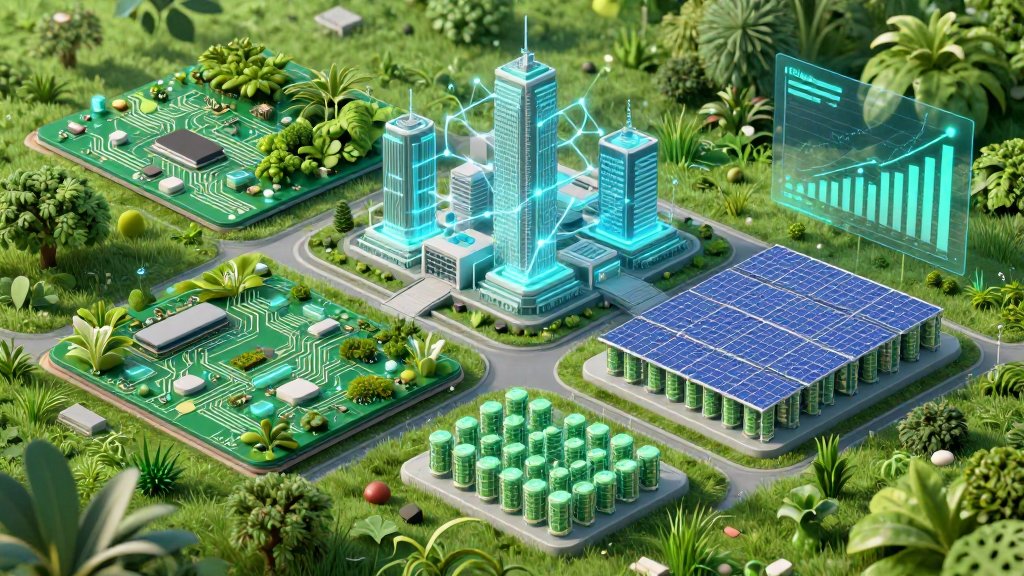
Climate Tech Market Soars to $218B by 2033: Is the Green Revolution Finally For Real?
Remember when "sustainable technology" meant overpriced bamboo straws and guilt-inducing reusable coffee cups? Well, wake up and smell the carbon credits, folks—because the green tech revolution isn't just coming anymore, it's already here, and it's apparently worth a staggering $218 billion by 2033.
The Numbers Don't Lie (For Once)
According to fresh market data from Astute Analytica, the global climate tech market is exploding faster than your Twitter mentions after a controversial take. From $34.20 billion in 2024 to a projected $218.33 billion by 2033—that's a compound annual growth rate of 22.87% that would make even the most aggressive crypto investors blush.
Image: Climate tech market growth visualization showing the exponential trajectory from 2024 to 2033. Source: Astute Analytica via GlobeNewswire
But here's where it gets interesting: this isn't being driven by tree-hugging idealists alone. The policy environment has transformed from "voluntary corporate pledges" (read: performative sustainability) to actual "enforceable regulatory mandates." Turns out, when governments start imposing real consequences, companies suddenly find the motivation to care about the planet. Who knew?
Your Old Circuit Boards Are So 2025
Speaking of things that are becoming obsolete, let's talk about printed circuit boards—those ubiquitous green boards inside every electronic device you own. They're about as recyclable as a plastic bag in a bonfire, but Jiva Materials in Hampshire, UK, has developed what they're calling the world's first fully recyclable PCB: Soluboard.
Image: Soluboard, the world's first fully recyclable printed circuit board made from plant-based materials. Source: Jiva Materials via Chemistry & Industry
Instead of energy-intensive fiberglass and toxic brominated flame retardants, Soluboard uses Lyocell (a regenerated fiber from bamboo or eucalyptus) and natural fibers. It achieves a 68% carbon saving compared to standard FR4 boards, and get this—it breaks down in hot water at 90°C. That's right, you could theoretically recycle your old tech with a really hot bath. Okay, not literally, but the innovation is real and saving 590 grams of plastic per square meter compared to traditional boards.
The University of Glasgow has already demonstrated these boards can handle frequencies above 4GHz—WiFi, Bluetooth, RFID. So you're not sacrificing performance for your eco-conscience, which is more than we can say for most green compromises.
Buildings That Actually Think
Meanwhile, the green building sector is quietly having a glow-up. The global green buildings market surpassed $0.5 trillion in 2023 and could double to $1 trillion this decade. And this isn't just about LEED plaques and fancy roof gardens anymore—we're talking about buildings that are genuinely intelligent.
Image: Smart building technology dashboard showing AI-driven energy management and predictive maintenance systems. Source: Autodesk
Smart buildings using IoT sensors, AI, and machine learning can reduce whole-building energy use by 18%, with some cases hitting 70% savings over three years. These systems adjust everything from HVAC to lighting based on real-time occupancy and conditions. Your office might actually be comfortable without requiring you to wear a parka in July because some thermostat decided to play it safe.
Australia's Battery Revolution
Down under, they're not just talking about energy storage—they're building it like there's no tomorrow (which, given climate projections, might be accurate). Octopus Australia just acquired plans for a 4.8GWh battery storage project in New South Wales, and Energy Vault secured a 100 MW / 870 MWh long-term energy service agreement for another Australian project.
Battery prices have reportedly dropped 60% in two years, making grid-scale storage not just viable but competitive with fossil fuel peakers. Big batteries in Australia are already overtaking peaking gas generators in major state grids, which is basically a polite way of saying "sorry natural gas, we found something cheaper and cleaner."
The Verdict
Look, I'm as skeptical as the next cynical tech writer when it comes to corporate sustainability promises. But the convergence of enforceable policies, genuine technological innovation, and economics that actually make sense suggests something different is happening this time.
We're seeing a $95 billion PCB market being disrupted by biodegradable alternatives. We're watching buildings evolve from energy-guzzling monstrosities to intelligent, responsive systems. And grid-scale batteries are making renewable energy viable without the reliability panic.
Is it enough to stop the climate apocalypse? Probably not on its own. But for the first time, sustainable technology isn't just a marketing footnote—it's becoming the main event. And that, ironically enough, is actually worth getting excited about.
Sources:
- Climate Tech Market to Reach US$ 218.33 Billion by 2033 - Astute Analytica via GlobeNewswire
- Sustainable Technology: Building Greener Circuit Boards - Chemistry & Industry
- 6 Future-Focused Applications of Green Building Technology - Autodesk
- Energy Vault Announces Award of 100 MW / 870 MWh Long-Term Energy Service Agreement - BusinessWire
- Battery Archives - RenewEconomy - RenewEconomy
Comments ()