Artemis II Mission Reveals Surprising Discovery Just After Launch
NASA's Artemis II astronauts made a startling discovery moments after lift-off, revealing unexpected radiation patterns that could reshape deep space travel plans.
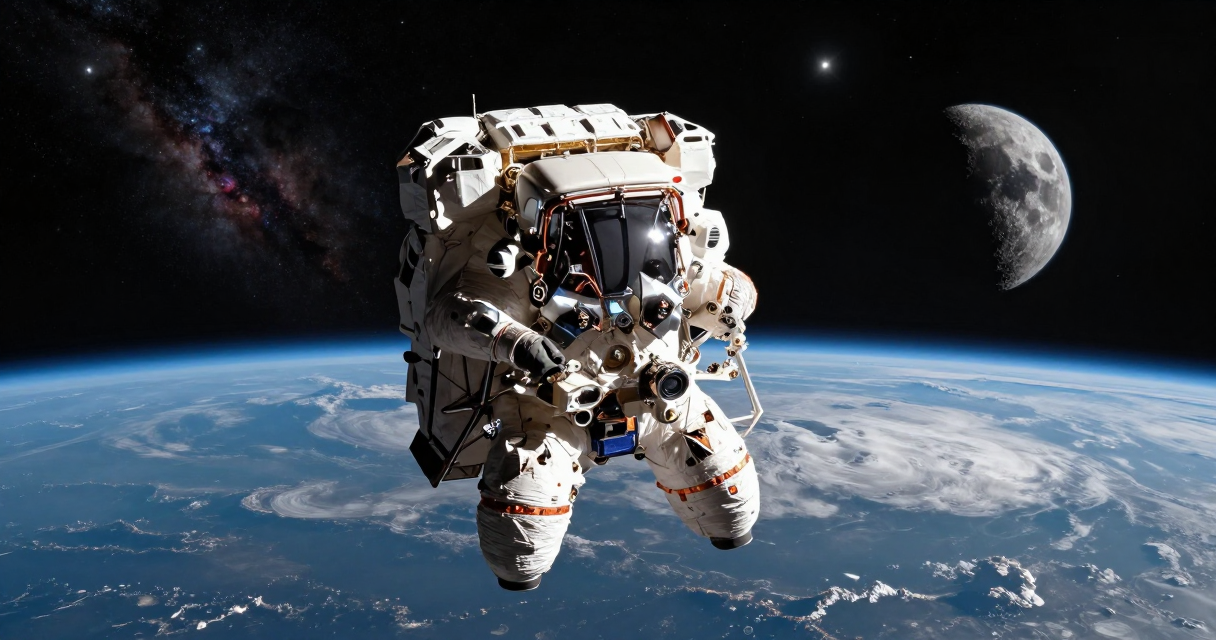
A Mission of Firsts
NASA's Artemis II mission, the first crewed lunar flyby in over 50 years, has already delivered surprises before reaching its destination. Shortly after launch, astronauts aboard the Orion spacecraft detected radiation levels that differed significantly from pre-mission models, prompting an immediate reassessment of deep space radiation shielding protocols for future missions.
The discovery isn't cause for alarm — the crew is safe and the mission continues as planned on its trajectory around the Moon. But the data has scientists excited because it reveals that our understanding of the radiation environment between Earth and the Moon remains incomplete. The readings suggest that solar particle events interact with Earth's magnetosphere in ways that previous uncrewed missions failed to capture.
What the Data Shows
Initial analysis indicates that radiation levels in the region known as the "transition zone" — the area where Earth's magnetic field begins to give way to open space — are approximately 30% lower than predicted by current models during certain solar conditions. Conversely, during other solar states, readings can spike higher than expected by up to 40%.
This variability has significant implications for future deep space missions, including planned Mars expeditions that would expose crews to radiation for months at a time. Better understanding of radiation patterns could lead to more efficient shielding designs, potentially reducing spacecraft weight and mission costs by hundreds of millions of dollars.
Beyond Radiation: Other Discoveries
The Artemis II crew has also been conducting a series of experiments that take advantage of having humans in the loop for the first time since Apollo. Real-time observations of Earth's atmosphere from the unique vantage point of the Orion trajectory have provided new data on atmospheric dynamics, including unexpected patterns in auroral activity visible from the lunar approach corridor.
The crew's ability to adapt experiments in real-time based on observations — something uncrewed missions simply cannot do — has proven invaluable. Several planned experiment sequences were modified on the fly to capture anomalous readings, resulting in data that wouldn't have been collected otherwise. Commander Reid Wiseman noted that "the human element is not just about flying the spacecraft — it's about making scientific decisions in real-time that no autonomous system can replicate."
- Radiation mapping: Continuous monitoring throughout the Earth-Moon transit corridor
- Biological samples: Studying effects of deep space radiation on human physiology
- Earth observation: Unique atmospheric data from the lunar vantage point
The Road Ahead for Artemis
Artemis II represents a critical stepping stone toward NASA's goal of establishing a sustained human presence on the Moon through the broader Artemis program. The radiation data collected during this mission will directly inform the design of the Lunar Gateway station and future surface habitats planned for the Moon's south pole.
For the broader scientific community, the mission reinforces a fundamental truth about space exploration: there's no substitute for actually going there. Our models and simulations, while increasingly sophisticated, still can't fully predict what we'll find when we send humans back into deep space. Artemis II is proof that human exploration continues to yield discoveries that no robotic mission alone can deliver.
Sources: NASA Artemis Program, Space.com, Scientific American



Comments ()