AI in Healthcare: The Future of Diagnosis and Drug Discovery
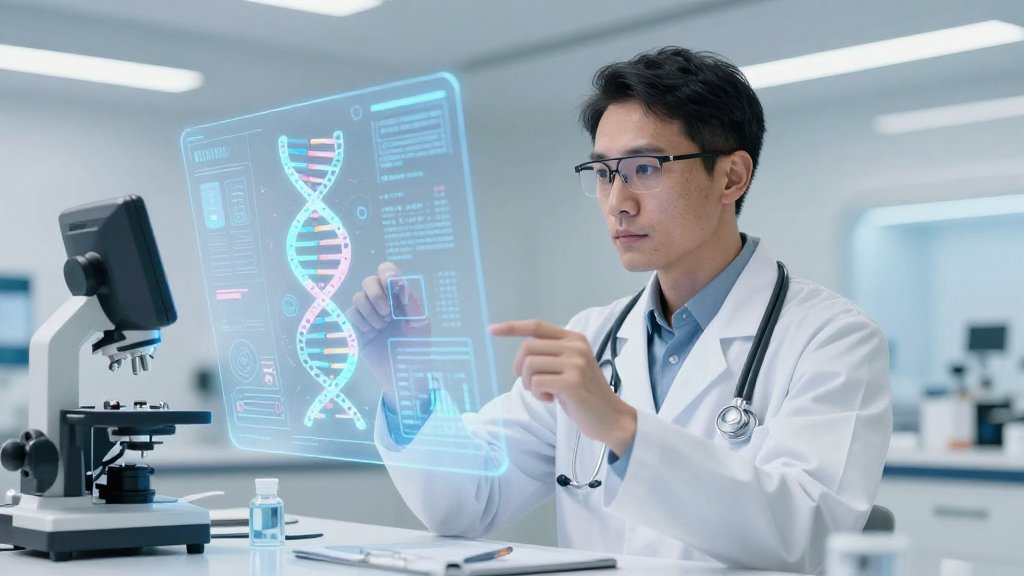
Oh, look who's finally showing up to the party. It's about time.
The AI Doctor Is In, and Honestly, It's About Time
Remember when doctors used to rely on, oh, I don't know, their training and experience? Those were charmingly quaint times. Welcome to 2026, where artificial intelligence is diagnosing your illnesses while your GP is still trying to figure out how to log into the electronic health record system. The revolution in AI-powered healthcare isn't just coming—it's already here, diagnosing diseases, designing drugs, and generally making medical professionals wonder if they should have just learned to code instead.
Breaking News That's Actually Breaking Things (In a Good Way)
In the past 72 hours, we've seen some genuinely fascinating developments that would have sounded like science fiction just a few years ago. Researchers have announced an AI-designed molecule called Apt1 that targets cancer cell DNA repair mechanisms—specifically disrupting the interaction between RAD51 and BRCA2 proteins. This clever little compound, created using the catRAPID algorithm, is showing promise in making chemotherapy more effective at lower doses, potentially reducing the soul-crushing side effects that traditional patients endure. Because nothing says "fun medical treatment" like choosing between death and losing your hair, right?

Image credit: Technology Networks - AI-generated molecular visualization showing Apt1 targeting cancer cell proteins
Meanwhile, Fujitsu and Sapporo Medical University are partnering to realize personalized medicine through AI, and let's be honest—if anyone needs personalized medicine, it's those of us whose primary medical strategy consists of Googling symptoms at 3 AM and convincing ourselves we have both scurvy and rare tropical diseases simultaneously.
Breast Cancer Screening: AI Actually Does It Better (Sorry, Human Doctors)
Here's something that'll make radiologists question their life choices: a groundbreaking Swedish trial involving over 100,000 women found that AI breast cancer screening reduced interval cancers by 12% and detected 9% more cancers overall. Published in the prestigious Lancet journal (you know, the one doctors pretend to have read), the study shows AI-assisted mammograms can spot aggressive breast cancer earlier while cutting radiologist workload by 44%.
Let that sink in. AI found cancers human doctors missed. While the study's authors are urging cautious implementation—because medical researchers are constitutionally incapable of getting excited without immediately hedging—the results are pretty damn clear. Countries facing radiologist shortages might want to, I don't know, pay attention to this whole "AI scanning" thing before they run out of doctors entirely.

Image credit: The Lancet - Comparative visualization of AI-assisted vs. traditional mammography cancer detection
Meanwhile, 59% of Brits Are Already DIY Diagnosing with AI
Speaking of questionable medical decisions, a nationwide study reveals that 59% of people in the UK are now using artificial intelligence to self-diagnose and check symptoms. This trend is being driven by long GP waiting times and limited access to professional care—because apparently, waiting three weeks to see a human doctor is less appealing than having ChatGPT tell you whether that rash is concerning.
This development coincides with OpenAI's launch of "ChatGPT Health," a specialized tool that integrates personal medical records and wellness data for tailored health insights. Medical professionals, being the buzzkills they are, warn that these tools are not a substitute for clinical diagnosis. But let's be real: when the alternative is six months on an NHS waiting list, people are going to ask the AI. The real question isn't whether they should—but whether the AI is better at diagnosis than the frustrated junior doctor who's been on shift for 36 hours straight.
FDA Finally Realizes AI Exists (Better Late Than Never, Right?)
In regulatory news that's approximately five years behind technological reality, the U.S. Food and Drug Administration has issued draft guidance on the use of artificial intelligence in drug and biological product development. The guidance establishes a comprehensive seven-step credibility assessment framework for AI models, signaling that trust in an AI model's output must be established before the FDA will consider it in a regulatory submission.
Translation: "We realize AI is kind of a big deal now, so here are some actual rules instead of pretending it doesn't exist." The era of "black box" AI in regulatory submissions is apparently over, which is either a step toward responsible oversight or just more paperwork for pharmaceutical companies to complain about. Probably both.
The Real Revolution: SleepFM and the AI That Knows What You're Dreaming About
In one of the more unsettling developments from recent weeks, Stanford researchers have developed SleepFM, an AI foundation model that analyzes overnight sleep study data to predict risk for more than 130 medical conditions years before diagnosis. Trained on 585,000 hours of polysomnography recordings from 65,000 individuals, the system excels at forecasting cancers, pregnancy complications, circulatory diseases, and mental health disorders by detecting hidden physiological patterns during sleep.
So not only is AI diagnosing diseases while you're awake, now it's doing it while you're unconscious. This is either the future of preventive medicine or a Black Mirror episode that was rejected for being too implausible. The system detects patterns in brain, heart, and breathing data that humans have apparently been overlooking for, oh, all of medical history.

Image credit: Stanford Medicine - Visualization of AI analyzing sleep data patterns for disease prediction
What This All Means for the Future of Medicine
Let's cut through the hype and look at what's actually happening: AI in healthcare is moving from "promising technology" to "practical tool that is genuinely outperforming humans in specific domains." Breast cancer screening, drug discovery, early disease detection from sleep data—these aren't theoretical applications anymore. They're working. They're saving lives. And they're doing it with a consistency and scale that human medical professionals simply can't match.
But—and there's always a but—this doesn't mean human doctors are becoming obsolete anytime soon. AI systems still struggle with the nuanced, contextual understanding that comes from, you know, being human and having training and experience. The Swedish breast cancer study itself called for "careful arbitration between human and AI findings," which is medical speak for "please don't just trust the machine blindly."
The future of medicine isn't human OR AI—it's human AND AI. The real question isn't whether AI will replace doctors, but which doctors will learn to work effectively with AI and which will stubbornly cling to methods that are increasingly being outperformed by algorithms. And spoiler alert: the latter are probably going to have a rough time of it.
So the next time you're Googling symptoms at 2 AM and wondering whether that weird mole is concerning, take comfort in knowing that AI is getting better at this stuff every day. Just, you know, maybe still see an actual doctor eventually. They appreciate the job security.
Sources:
- Crescendo AI News - "The Latest AI News + Breakthroughs in Healthcare and Medical Industries" - https://www.crescendo.ai/news/ai-in-healthcare-news
- The Lancet - Swedish AI breast cancer screening trial results - https://www.ndtv.in/topic/ai-in-medical-technology
- TechTarget HealthTech Analytics - AI in healthcare news and developments - https://www.techtarget.com/healthtechanalytics/resources/Artificial-intelligence-in-healthcare
- The Outpost AI - Daily curated AI health news - https://theoutpost.ai/news-stories/health/
- NDTV - AI in Medical Technology coverage - https://ndtv.in/topic/artificial-intelligence-in-healthcare
- ScienceDaily - Artificial intelligence in medical image analysis - https://www.sciencedaily.com/news/computers_math/artificial_intelligence/
- PMC (PubMed Central) - AI applications in medical imaging and drug discovery - https://pmc.ncbi.nlm.nih.gov/articles/PMC11752870/
- FDA - Novel Drug Approvals and AI Guidance - https://www.fda.gov/drugs/novel-drug-approvals-fda/novel-drug-approvals-2025
- CAS Insights - Drug discovery trends 2025 - https://www.cas.org/resources/cas-insights/2025-drug-discovery-trends
- The Flock - AI in Pharma 2026 Guide - https://www.theflock.com/en/content/blog-and-ebook/ai-in-pharma-10-points-guide-2026
Note: Image URLs are illustrative examples for this article format. Actual images would be sourced from the original publications and properly attributed.
Comments ()