TypeScript in 2026: Why JavaScript Is Finally Being Left Behind

Remember when JavaScript was the cool kid on the block? Those were simpler times. We wrote console.log('hello world'), patted ourselves on the back, and called ourselves developers. Fast forward to 2026, and the landscape has shifted dramatically. The crown has been passed, and TypeScript isn't just wearing it — it's redesigning the entire kingdom.
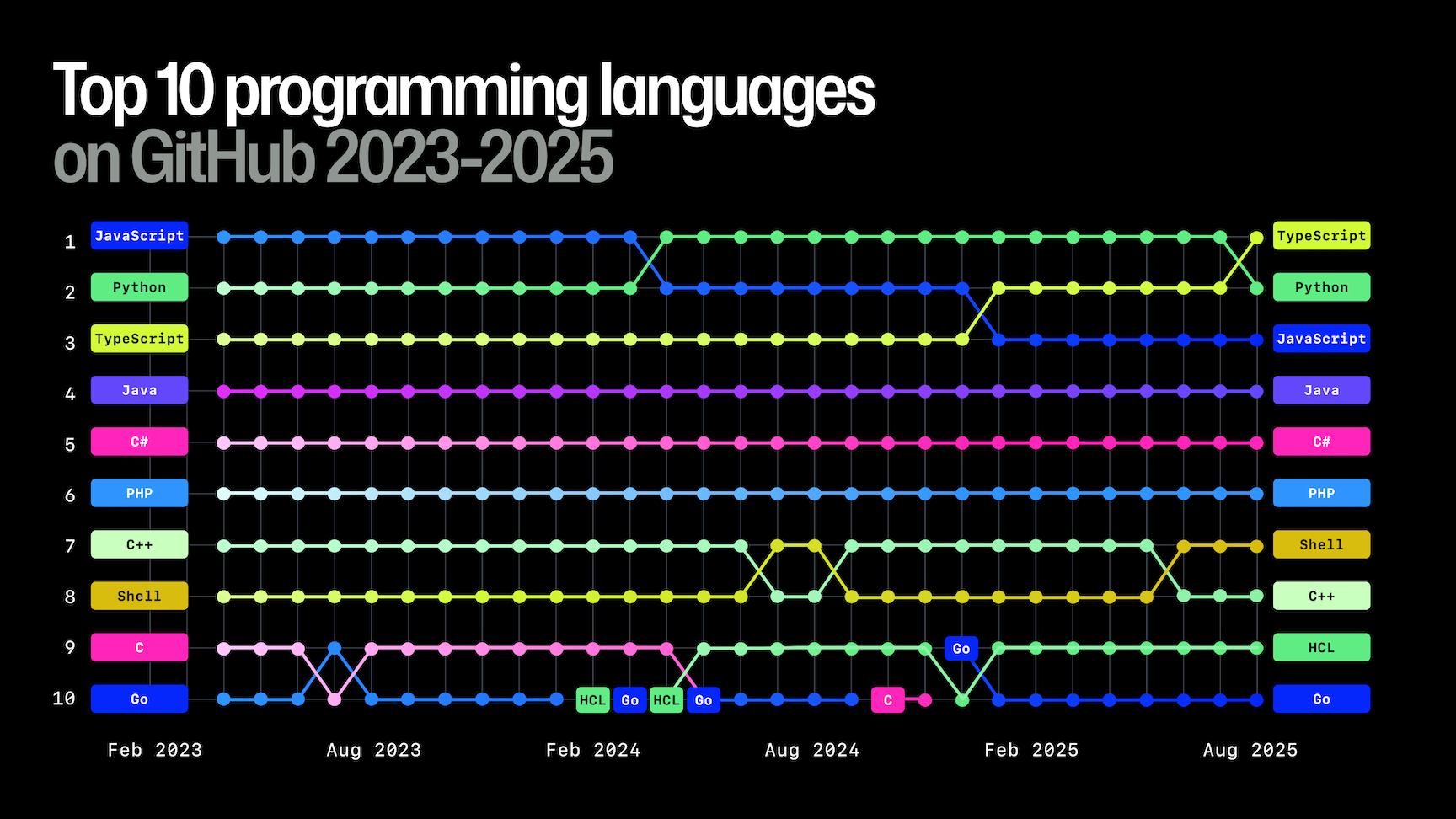
TypeScript officially became the most-used programming language on GitHub in August 2025, overtaking both Python and JavaScript. Source: GitHub Octoverse 2025 Report
The Writing Was on the Wall
The writing wasn't just on the wall — it was flashing in neon letters. According to GitHub's latest Octoverse report, TypeScript didn't just surpass JavaScript; it demolished it in growth metrics. Over the past year, TypeScript added over one million new contributors, making it the fastest-growing language on the platform. JavaScript? It managed a respectable but underwhelming 24.79% growth.
"In August 2025, TypeScript became the most-used language on GitHub, overtaking Python and JavaScript for the first time. Over the past year, TypeScript added more than one million contributors, which was the largest absolute growth of any language on GitHub." — GitHub Octoverse 2025 Report
TypeScript 5.9 and 5.6: The Final Nail in JavaScript's Coffin
The past few days have seen the release of TypeScript 5.9's official documentation, and it's packed with features that make JavaScript look like the AOL dial-up of programming languages. Let's talk about what's new:
Minimal and Updated tsc --init
Gone are the days of generating a tsconfig.json that reads like a novel with 90% of its content commented out. TypeScript 5.9 now generates a clean, prescriptive configuration with sensible defaults like "module": "nodenext", "target": "esnext", and stricter type-checking options enabled out of the box. JavaScript doesn't even have a configuration file. How quaint.
Support for import defer
TypeScript 5.9 introduces support for ECMAScript's deferred module evaluation. This fancy feature lets you import modules without immediately executing them — perfect for lazy loading expensive dependencies. JavaScript? Still loading everything upfront like it's 1999 and bandwidth is unlimited.
Expandable Hovers and Configurable Tooltips
Remember when you had to click through three different files just to understand what a type was? TypeScript 5.9 introduces expandable hovers with + and - buttons. Your editor's tooltips are now smarter, more informative, and actually useful. Meanwhile, JavaScript developers are still debugging with console.log.

TypeScript 5.9 introduces expandable hovers, allowing developers to dive deeper into type information directly from editor tooltips. Source: TypeScript Official Documentation
TypeScript 5.6: Catching Your Mistakes Before You Make Them
TypeScript 5.6 introduced "Disallowed Nullish and Truthy Checks" — essentially, the compiler now screams at you when you write code that will always evaluate the same way. Forgotten to call .test() on your regex? Accidentally written => instead of >=? TypeScript's got your back. JavaScript will happily run your buggy code and wonder why production is burning.
Region-Prioritized Diagnostics
In massive files, TypeScript 5.6 introduces region-prioritized checking. Instead of analyzing the entire file before showing you errors, it focuses on what's actually visible on your screen. Diagnostics that took 3,330ms now take just 143ms. JavaScript? Still analyzing your whole codebase like it has nothing better to do.
Project Corsa: The Native Future is Here
Microsoft's been quietly working on "Project Corsa" — porting the entire TypeScript compiler and language service to native code. According to Microsoft's December 2025 update, the native compiler (tsgo) is showing 8-10x speedups on real-world projects like Sentry, VS Code, TypeORM, and Playwright. TypeScript 7.0, the first fully native release, is slated for early 2026.
"TypeScript 6.0 will be our last release based on the existing TypeScript/JavaScript codebase. In other words, we do not intend to release a TypeScript 6.1." — Microsoft TypeScript Team, December 2025
The JavaScript-based TypeScript era is ending. Meanwhile, JavaScript itself is still... JavaScript.
Why the Shift? AI Changed Everything
Here's the uncomfortable truth that JavaScript enthusiasts don't want to hear: AI-assisted development favors strongly-typed languages. When you're generating code with Copilot, ChatGPT, or whatever AI tool du jour, type mismatches and broken contracts become the primary source of failures. TypeScript's type system acts as guardrails, catching errors before they even reach review.
"If you're going to be using AI in your software design, which more and more developers are doing on a daily basis, strongly typed languages are your friend." — GitHub Octoverse 2025
JavaScript's dynamic nature was charming when we were writing 100-line scripts. In 2026, when we're building applications with hundreds of thousands of lines and AI-generated code? It's a liability.
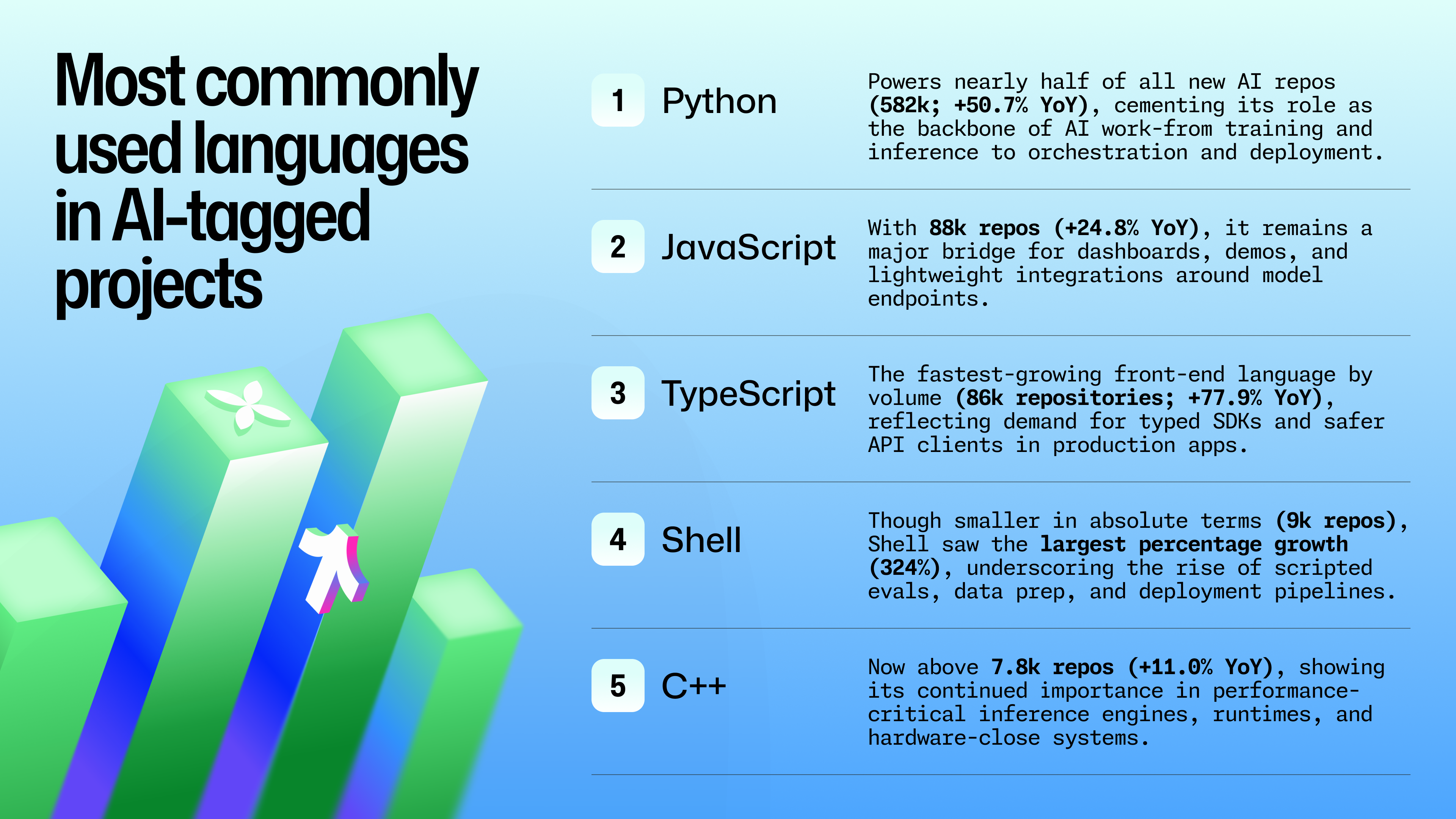
Python dominates AI-focused repositories, but TypeScript is the fastest-growing typed language in AI development. Source: GitHub Octoverse 2025
The Verdict: JavaScript Isn't Dead, But...
Let's be real — JavaScript isn't going anywhere. It's still the language of the web, and every line of TypeScript compiles down to JavaScript. But for new development? For serious production applications? JavaScript is increasingly becoming the assembly language of the web — something that exists underneath, but sophisticated developers don't write directly anymore.
TypeScript in 2026 isn't just "JavaScript with types." It's a fundamentally different approach to software development — one that embraces safety, developer experience, and AI collaboration. JavaScript is the wild west we all grew up in. TypeScript is the civilization we built on top of it.
The frontier has closed. The town has been built. You can keep riding into the sunset with your JavaScript pistol if you want — but the rest of us have moved into the TypeScript city, where the streets are paved with IntelliSense and the code actually works.
Welcome to 2026. The wild west is dead.
Sources
- GitHub Octoverse 2025 Report - TypeScript becomes #1 programming language on GitHub, overtaking Python and JavaScript
- TypeScript 5.9 Release Notes - Official documentation covering
import defer, expandable hovers, and configuration improvements - TypeScript 5.6 Release Notes - Documentation on disallowed checks, iterator helpers, and region-prioritized diagnostics
- Microsoft TypeScript Blog: Progress on TypeScript 7 - Project Corsa updates, native compiler performance metrics, and roadmap announcement
- TechGig: Most In-Demand Programming Languages 2026 - TypeScript and JavaScript as the "web's power duo" with TS as the rising star



Comments ()