The Past 72 Hours Have Been Absolutely Chaotic for AI – Here's What You Missed
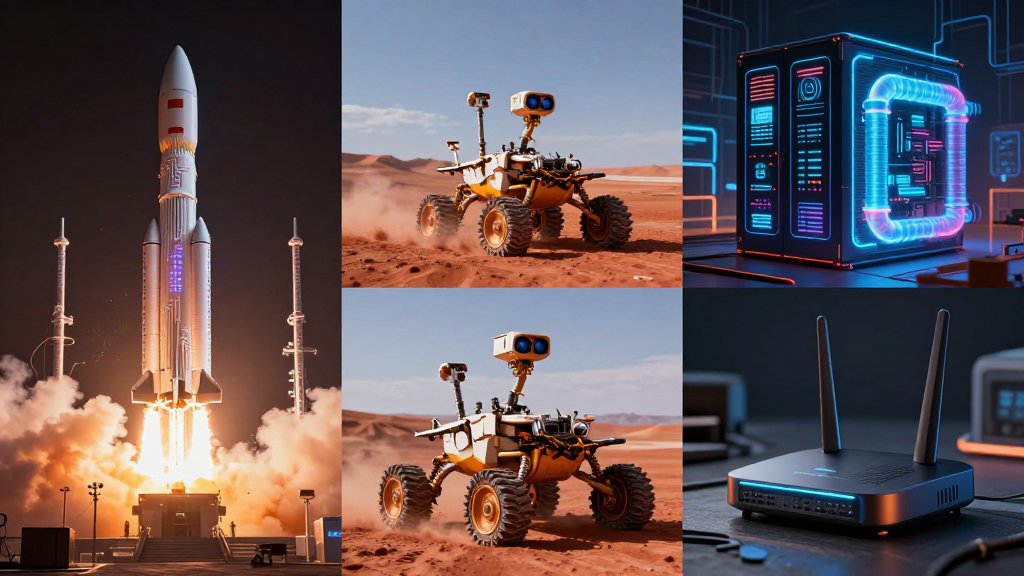
Ah, another day, another existential crisis-inducing flood of AI news. The past 72 hours have been nothing short of a fever dream for anyone trying to keep up with the tech world's relentless march toward our inevitable robot overlords. Grab your beverage of choice, because we've got a lot to unpack.
SpaceX Goes Full Bond Villain with $1.25 Trillion xAI Acquisition
Just when you thought Elon Musk's portfolio couldn't get any more unhinged, SpaceX officially announced it's acquiring his AI startup xAI in a deal valued at a staggering $1.25 trillion. That's right – trillion, with a T. The merger creates the world's most valuable private company and clears the way for Musk to pursue his obsession with space-based AI data centers powered by solar arrays. Because obviously, the next logical step after dominating electric cars, social media, and rocketry is to put AI brains in orbit. What could possibly go wrong? The merger aims to solve the ever-growing energy demands of AI by pushing data centers into space – a solution that's equal parts genius and terrifying.
Oracle's $50 Billion Bet on AI Domination
Meanwhile, Oracle decided to throw its hat in the ring with a massive $50 billion capital-raising plan for 2026 aimed at funding what they're calling the "largest AI data center expansion in history." The company announced its plans to raise $45-50 billion through a mix of debt and equity, and Wall Street apparently loved the idea – shares jumped 2% on the news. That's great, Oracle. Really. Because what the world definitely needed was another tech giant dumping the GDP of a small country into AI infrastructure. The funding is designed to fuel the construction of "Giga-scale" data center campuses and secure the hardware needed to power next-gen AI workloads. Oracle's free cash flow has gone negative thanks to these investments, and it's expected to stay that way until 2030, but who needs profits when you're building the future, right?
NASA's Perseverance Rover Now Navigates Mars with AI
In slightly less terrifying but equally impressive news, NASA's Perseverance rover just made history by becoming the first spacecraft to drive on another planet using routes planned entirely by artificial intelligence. The demonstration, executed on December 8 and 10, 2025, used generative AI to create waypoints for the rover as it navigated the rugged terrain of Jezero Crater. A vision-capable AI analyzed the same images human operators would typically study, identifying safe paths through Martian rocks and hazards. This marks a significant milestone in autonomous space exploration, proving that AI can handle complex route planning tasks that were previously the domain of human experts at the Jet Propulsion Laboratory. Pretty impressive, though it does raise questions about what happens when the AI decides Mars looks better without humans.
Liquid Cooling Becomes Mandatory for AI Data Centers
As if we needed more evidence that AI chips are becoming miniature suns, February 2, 2026 marked a historic tipping point for data center infrastructure: liquid cooling penetration in new high-performance compute deployments officially exceeded 50%, ending air cooling's multi-decade reign as the default standard. This isn't about marginal efficiency gains – it's a thermal necessity. AI accelerators are generating so much heat that traditional air cooling simply can't keep up. The market for liquid cooling in AI data centers is projected to hit $7.9 billion by 2026, representing year-over-year growth of 106%. Companies are racing to implement cold plate and immersion cooling solutions that can handle 1,000W+ AI chips like NVIDIA's latest offerings. So congratulations, tech industry – you've finally figured out how to make water cooling not just for hardcore PC gamers anymore.
OpenAI Unleashes the Next Generation: GPT-4o Gets the Axe
In what's becoming a recurring theme of AI development moving faster than our ability to get comfortable with anything, OpenAI announced it's retiring several beloved models from ChatGPT, including GPT-4o, GPT-4.1, GPT-4.1 mini, and o4-mini. The cutoff date is February 13, 2026, and the company claims the newer GPT-5.2 models are "good enough" to replace them. GPT-4o, in particular, had developed a devoted following thanks to its warmer, more conversational tone – some might say "sycophantic," a criticism OpenAI seems to have taken to heart. The retirement applies to ChatGPT users, while API access to GPT-4o will continue until February 16, giving developers a narrow window to migrate their applications. Because nothing says progress like forcing everyone to upgrade to the latest version every few months.
Wi-Fi 7 Adoption Accelerates: Faster Internet for Everyone (Eventually)
On the connectivity front, Wi-Fi 7 continues its surprisingly rapid adoption. According to RCR Wireless, Wi-Fi 7 adoption has actually exceeded expectations despite what analysts initially called a "questionable business model." The technology has outpaced previous generations, driven by a focus on consistency rather than just peak speeds. Expectations are that adoption will accelerate further in 2026, particularly among carriers. Research from Dell'Oro Group suggests Wi-Fi 7 could capture over 90% of the market, driven by unusually low pricing and strong enterprise demand. Meanwhile, the Netgear Nighthawk RS700S has emerged as one of the most comprehensive Wi-Fi 7 routers available, promising speeds up to 19Gbps and coverage across 3,500 square feet. The future is fast, my friends – assuming your ISP can actually deliver those speeds.
The Bottom Line: We're Living in the Future, Whether We Like It or Not
The past 72 hours have been a whirlwind of announcements that would have seemed impossible just a few years ago. We've got space-based AI data centers, trillion-dollar mergers, autonomous robots driving on Mars, liquid-cooled data centers becoming standard, and AI models being retired faster than most people can learn to use them. The pace of change has accelerated to a point where keeping up feels like trying to drink from a fire hose. The question isn't whether AI will transform our world – it clearly already is. The real question is whether we'll figure out how to live with these technologies before they completely outpace our ability to understand or control them. Here's hoping the AI controlling Mars' rover doesn't decide Earth's terrain is more interesting.
Sources
- SpaceX xAI Merger: TechCrunch, Al Jazeera
- Oracle $50B Fundraising: Reuters, Financial Content
- NASA Perseverance AI Drive: NASA JPL, ScienceDaily
- Liquid Cooling in Data Centers: Financial Content, Capwolf
- OpenAI GPT-4o Retirement: OpenAI, CNBC, VentureBeat
- Wi-Fi 7 Adoption: RCR Wireless, Wi-Fi Alliance
- Netgear RS700S Router: Netgear, BroadbandNow


Comments ()