The Face War of 2026: When Your Brain Becomes Your Keyboard and Smart Glasses Get Political Subsidies
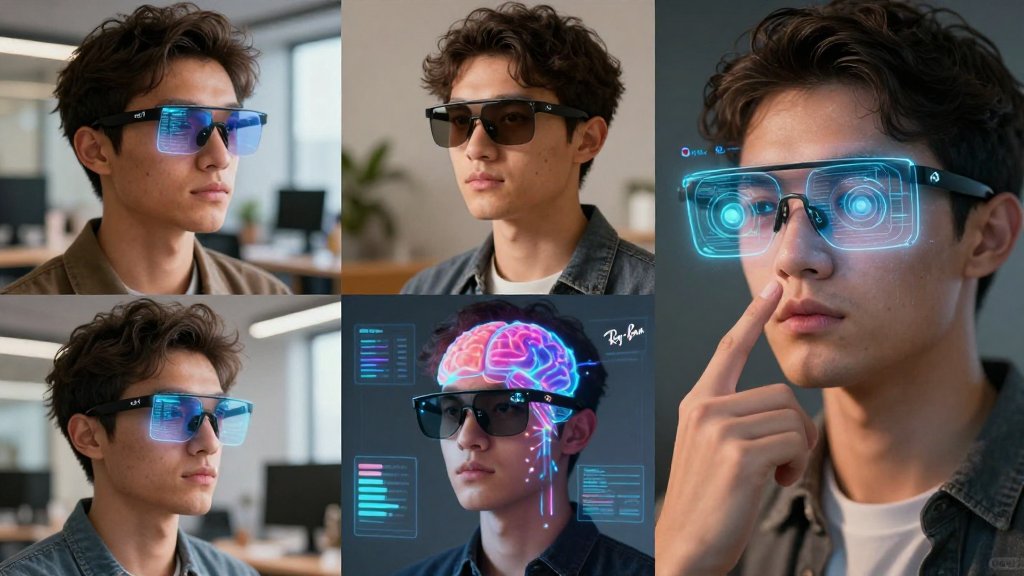
Ah, February 2026. The month when Extended Reality officially stopped being a "future technology" and started becoming the next battleground for tech supremacy—and yes, the government is now subsidizing your face.
Look, I've covered AR, VR, and XR long enough to know when we're witnessing actual momentum versus another round of hype cycle theater. And the past 72 hours? This is the real deal. We're talking brain-signal wristbands, government subsidies for smart glasses in China, and Google deciding that after two decades of trying, maybe third time's the charm for face-mounted computers.
Let's dive into what just happened—and why it actually matters.
Meta Just Declared War on Your Smartphone (And Your Thumbs)
Breaking news that's actually worth your attention: Meta's Reality Labs finally delivered something that doesn't make investors want to jump out windows. At what was apparently Meta Connect 2025 (time is weird), CEO Mark Zuckerberg unveiled the Ray-Ban Display smart glasses paired with something called a Neural Band.
Here's the kicker: it reads your brain signals to let you text at 30 words per minute. That's nearly matching average smartphone typing speeds without touching anything. The technology is called surface electromyography (sEMG), which detects neural signals traveling from your brain to your hand before you even move.
Zuckerberg stood on stage literally typing in thin air, his fingers moving like he's gripping an invisible pen while text appeared in real-time on the glasses' display. "I'm up to about 30 words a minute on this," he casually dropped to the audience. "You can get pretty fast."
Research shows average smartphone users text at about 36 words per minute. So we're talking nearly parity with your thumbs—which, let's be honest, were never designed for glass rectangles anyway.
This isn't just another pair of smart glasses. It's Meta making a play to replace the smartphone paradigm entirely. And if there's one thing Zuckerberg loves more than VR, it's a platform war he can win by sheer force of will and billions of dollars.
Google's Back (Again): AI Glasses With Samsung and Warby Parker
Speaking of companies that never know when to quit, Google officially confirmed it's launching its first AI-powered glasses in 2026. Because apparently Glass (2013) wasn't enough of a cautionary tale.
But here's the thing: they might actually nail it this time. The search giant is partnering with Samsung and Warby Parker, learning from past mistakes. Co-founder Sergey Brin openly acknowledged that previous smart glasses failures were due to less advanced AI and supply chain issues.
The new approach? Features like audio interaction with the Gemini AI assistant and in-lens displays for navigation and translations. Google's message: "For AI and XR to be truly helpful, the hardware needs to fit seamlessly into your life and match your personal style."
Translation: we're trying really hard not to look like tech-nerd cyborgs this time.
The competitive landscape is getting crowded, with Meta leading through Ray-Ban Meta glasses, Snap and Alibaba also entering the space, and Apple still playing the "we'll announce when we're good and ready" game. Google also announced software updates for its Galaxy XR headset, including new features that allow connectivity with Windows PCs and a travel mode for use in vehicles and airplanes.
[Google's AI Glasses Announcement]
China Just Made Smart Glasses a State Priority
Here's a curveball that caught everyone off guard: China's National Development and Reform Commission and Ministry of Finance just announced that smart glasses are now eligible for national subsidies, alongside phones, tablets, and other mature digital products.
This isn't just a discount—it's official recognition that smart glasses have crossed from "experimental toy" to "strategic technology category." Industry analysts are calling this a catalyst that could accelerate smart glasses from niche experimentation to mass adoption.
The timing isn't accidental. China's market is projected to explode, with forecasts suggesting the country's smart glasses market could break 100 billion yuan (roughly $14 billion) by 2029. Sales jumped 159.76% year-over-year to 3.29 million units in 2025, and we're just getting started.
The policy signals something bigger: smart glasses are being positioned as the next major computing platform after smartphones. Their "hands-free" advantage and ability to overlay information on the real world make them uniquely positioned as AI's ideal physical interface.
When governments start subsidizing face computers, you know we've reached a new stage of adoption. The question isn't whether AR/VR/XR goes mainstream anymore—it's how fast and who gets there first.
[China Smart Glasses Subsidy Announcement]
Market Momentum: The Numbers Don't Lie
TrendForce's latest data confirms what the policy moves suggest: global AR glasses shipments will climb to 950,000 units in 2026, representing a 53% year-over-year growth rate.
What's driving this? Meta's Ray-Ban Display smart glasses performing better than expected. Supply chain reports show component orders getting dramatically increased—Lumus waveguide orders jumped from 80,000 to 150,000 units (an 87.5% increase). OmniVision's LCoS, Goeroptics light engine assembly, and SCHOTT waveguide component orders are all seeing stepped-up demand.
The broader market is bullish too. TrendForce expects global AR glasses shipments to exceed 32 million units by 2030. That's not niche anymore—that's mainstream territory.
Chinese analysts are even more aggressive. Citi predicts 112 million AI glasses shipments by 2030 with a compound annual growth rate of 105% from 2024, and a $40 billion market size growing at 112% annually.
When you have analysts throwing around numbers like "100% CAGR," it usually means one of two things: massive bubble formation, or genuine paradigm shift. Given the product announcements and policy support stacking up, I'm betting on the latter this time.
[TrendForce AR Glasses Market Report]
Enterprise XR: From Hype to Actual ROI
While consumer face computers grab headlines, Extended Reality is quietly but aggressively proving its worth in enterprise settings. UC Today reports that XR is moving "out of the hype cycle and into the workplace," with real adoption in healthcare, logistics, manufacturing, and construction.
The enterprise use cases aren't theoretical anymore:
- Healthcare: AR systems like Augmedics xvision project 3D spinal anatomy directly into surgeons' field of view during complex procedures
- Manufacturing: AR-assisted "pick-by-vision" and maintenance guidance reducing downtime and rework
- Training: VR onboarding and rehearsal showing improved skill retention and reduced training time compared to traditional methods
The shift is clear: XR is becoming "the interface layer between people and complex systems, rather than a standalone experience." For businesses under pressure to scale safely and efficiently, XR is delivering measurable ROI across training, frontline execution, and collaboration.
Microsoft HoloLens 2 remains the established enterprise option for mixed reality, with strengths in spatial mapping, secure device management, and deep Microsoft ecosystem integration. The trade-off is cost and limited field of view compared to consumer VR platforms.
[Enterprise XR Market Analysis
CES 2026: Wearables as the Sleeper Theme
Forrester analysts who attended CES 2026 identified wearables as an unexpected but powerful emerging theme, particularly for frontline worker enablement.
A standout demo from PwC showed how wearable smart glasses could connect a factory worker to a remote expert who sees exactly what the worker sees—and in the demo, that expert even summoned a robot to deliver a replacement part. Simple example, profound implications.
Healthcare pilots are equally compelling, with programs equipping expectant mothers with Pixel phones and Fitbit devices, paired with an AI-powered nurse assistant. The results: better access to care, personalized health insights, and stronger connections between providers and patients.
But wearables also introduce new risks. Devices like Motorola's Project Maxwell—an AI-native pendant that "sees what you see and hears what you hear"—trigger legitimate enterprise concerns about privacy, IP protection, and workplace surveillance.
As consumer adoption of discreet, sensor-rich wearables grows, enterprises will need to rethink privacy policies, manager training, and the boundaries between personal and professional technology.
[CES 2026 Enterprise Implications
The Verdict: We're Past the Point of No Return
Here's my unfiltered take: Extended Reality and smart glasses have crossed the threshold from "cool tech demonstration" to "inevitable computing platform."
The past 72 hours alone show:
- Brain-interface input that rivals thumb typing speeds
- Major tech giants committing to face computers with serious partnerships
- Government recognition through subsidy programs
- Enterprise adoption delivering measurable business value
- Market projections suggesting hundreds of millions of units within the decade
Is there still hype? Absolutely. Will there be failed products and overpromised timelines? Guaranteed. But the momentum is real, the trajectory is clear, and the players involved have the resources to make this happen.
The question for 2026 isn't whether AR/VR/XR and smart glasses will reshape our relationship with technology—it's which vision wins, which companies survive the shakeout, and whether we end up with an open ecosystem or another walled garden dystopia.
My money's on the latter. Because if there's one thing tech history teaches us, it's that companies rarely learn from past mistakes until they've made them twice.
Sources:
- Meta Neural Band and Ray-Ban Display Glasses - TechBuzz
- Google AI Glasses 2026 Launch - Intellectia.AI
- China Smart Glasses Subsidy Policy - Sina Finance
- TrendForce AR Glasses Market Forecast - C114
- Enterprise XR Use Cases and ROI - UC Today
- CES 2026 Wearables Analysis - CDOTrends
Comments ()