Quantum Computing Finally Gets Real: Welcome to the Commercial Era (No, Seriously This Time)

Remember when quantum computing was that buzzword tech bros dropped at cocktail parties to sound smart? You know, alongside "blockchain revolution" and "the metaverse is the future of work"? Well, grab your skeptical face because something shifted over the past few days, and it's actually worth paying attention to this time.
The GPS-Killing Quantum That Actually Works (Wild, Right?)
Let's start with the thing that sounds like science fiction but isn't. Q-CTRL just dropped a bombshell: their Ironstone Opal quantum navigation system has been validated in real-world air, land, and maritime trials. This isn't some lab demo anymore – it's being showcased at the Singapore Airshow, which means actual aerospace and defense leaders are taking notes.
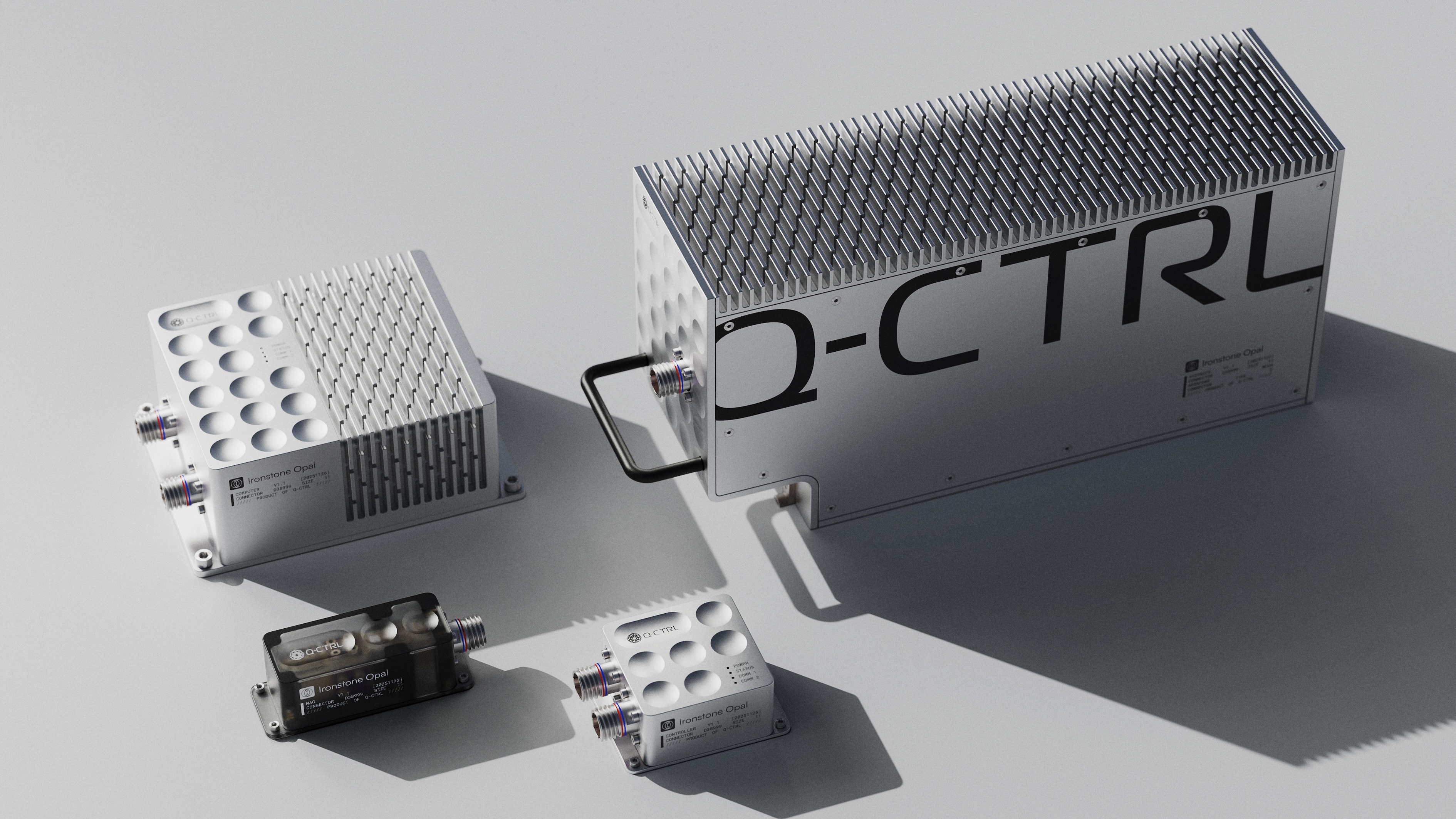
Q-CTRL's Ironstone Opal system delivers GPS-free navigation that's unjammable, unspoofable, and works in all visibility conditions. Image: Q-CTRL
Here's why this matters: GPS jamming is becoming a legit headache, with projected economic losses hitting $1 billion per day in the U.S. alone. Ironstone Opal uses quantum magnetometry and magnetic map matching to deliver bounded positioning without any external radio signals. It improves inertial positioning by over 100x while eliminating drift. The company's been working with heavy hitters like Lockheed Martin and Airbus, and now they're offering evaluation kits so companies can actually test this stuff without modifying their aircraft. That's how you commercialize quantum tech – make it plug-and-play for the risk-averse defense industry.
IBM's Nighthawk: Less Flash, More Substance (Finally)
Meanwhile, IBM quietly dropped the Nighthawk processor, and honestly? It might be more important than the headline-grabbing qubit count wars. Instead of chasing raw numbers like a teenager chasing Instagram followers, Nighthawk is engineered for circuit depth – a 30% increase over their previous Heron processors with 5,000 two-qubit gates, pushing to 7,500 by late 2026 and 10,000 by 2027.
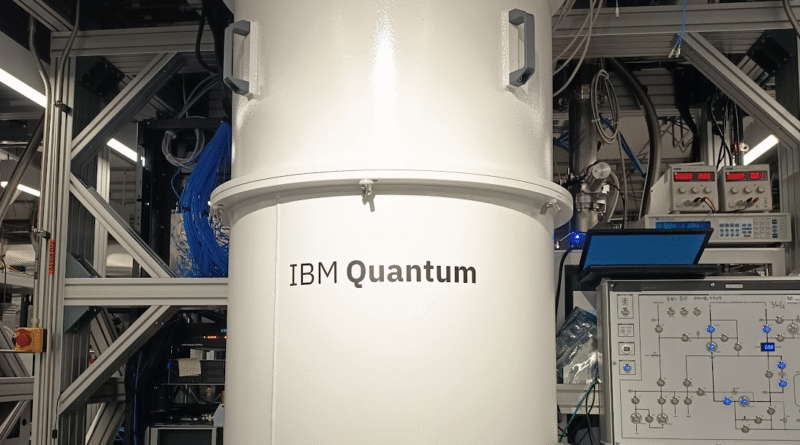
Inside IBM's quantum labs, the Nighthawk processor hums away as the company shifts from "demonstrating physics" to actual scaling. Photo: Raymond Tribdino/CleanTechnica
The real story here? IBM's targeting 1,000 logical qubits by 2028 through a hybrid approach that admits quantum won't replace classical computing – it'll selectively augment it. They're even working with companies like Cisco on distributed quantum systems spanning multiple data centers. This isn't marketing hype anymore; it's infrastructure planning. They're treating quantum as an engineering problem rather than a PowerPoint slide.
The Money's Finally Following the (Actual) Progress
Let's talk about what happens when serious money smells blood. The industry's moving from "who has the best lab" to "who can actually ship systems." Europe just launched a €50M program called Photonics for Quantum (P4Q) focused specifically on manufacturable photonic chips – not prototypes, but production-grade stuff. Spain's getting its first IQM quantum computers (a 54-qubit Radiance and 5-qubit Spark) by June 2026, integrated into actual HPC environments.

The Singapore Airshow served as the stage for Q-CTRL to showcase quantum navigation to defense and aerospace leaders. Image: Q-CTRL
IonQ's making power moves too – expanding their QuantumBasel partnership to over $60M, extending through 2029, and delivering a 100-qubit Tempo system to Korea's KISTI institute. They're even acquiring SkyWater Technology for vertical integration, making them the only company that can manufacture its own quantum computing chips. Meanwhile, SEALSQ's pushing semiconductor-based quantum approaches rather than the cryogenic superconducting path that's basically impossible to scale beyond labs.
What This Actually Means for Your Business (Spoiler: Not Tomorrow, But Not Never Either)
Here's the thing nobody wants to hear: quantum computing isn't going to solve climate change or replace classical supercomputing this decade. But if you're in cleantech, pharmaceuticals, materials science, or anything where chemistry and physics simulations crush classical compute? You should probably start paying attention.
BMW's been working with IBM on quantum for years – supply chain optimization, powertrain efficiency, fuel cell modeling. Airbus is using quantum systems for hydrogen aircraft research. These aren't pilot programs for PR; they're building institutional quantum expertise because when the hardware catches up to the use cases, they want to be ready.
The inflection point's real – fault-tolerant quantum computing is moving from theoretical speculation to credible industrial milestone within the next 5 years. The canvas size isn't dramatically changing between now and 2030, but the resolution is improving fast. Work you do today scoping quantum-relevant problems? That ports forward.
The Bottom Line
Quantum computing graduated from "perpetually five years away" to "actually happening if you're paying attention." The signal isn't in the stock prices (which, let's be real, some of these valuations are getting bubbly – looking at you, D-Wave's 211% 2025 surge with a P/S ratio of 342). It's in the actual hardware shipping, the real-world validations, and the shift from research funding to production infrastructure.
Organizations still treating quantum as "innovation theater" for their innovation team? They're about to get lapped by the ones building quantum readiness into their actual business operations. The window's narrowing, and if you're not even thinking about quantum-safe encryption by 2035 (that's the NSA's deadline for national security systems, by the way), well, good luck with that.
Quantum's not a science project anymore. It's becoming strategic infrastructure. The question isn't whether you need to care – it's whether you'll be ready when it actually matters.
Sources & Further Reading
- Q-CTRL: First Commercial Quantum Navigation System Validated in Real World – Details on Ironstone Opal system and Singapore Airshow showcase
- CleanTechnica: IBM Advances Quantum Computing with Nighthawk for Clean Energy Transformations – In-depth analysis of Nighthawk processor and IBM's commercial roadmap
- The Quantum Insider/Intellectia: The Truth Behind Quantum Computing Stocks' Surge – Industry analysis including IonQ, IQM, and market developments
- Travis Scholten: The Future of Quantum Computing (No Crystal Balls Necessary) – Strategic analysis of quantum industry roadmaps and commercialization timelines
- ScienceDaily: A Tiny Light Trap Could Unlock Million Qubit Quantum Computers – Stanford's breakthrough in optical cavity technology for qubit readout



Comments ()