OpenClaw Just Dropped Its Biggest Update Yet – and Security Researchers Are Losing Their Minds
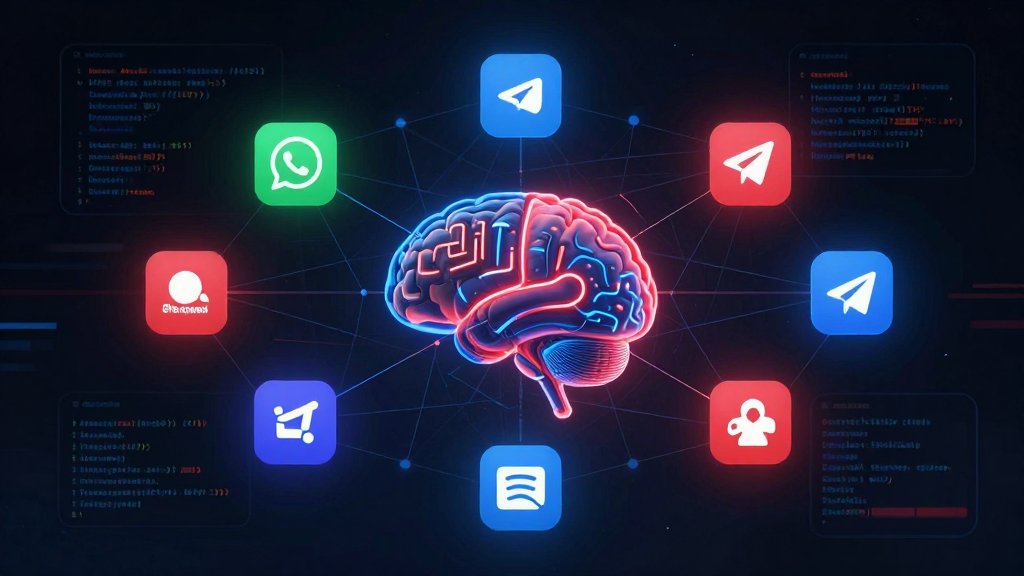
Remember when ChatGPT forgot everything the moment you refreshed the page? OpenClaw apparently didn't get that memo. In fact, this open-source AI assistant has been quietly building momentum with its persistent memory and local-first architecture, culminating in a viral explosion that's captured the tech world's attention over the past 72 hours.
The Update That Broke the Internet
OpenClaw's freshly released 2026.2.3 update isn't just a version bump – it's basically throwing grenades at the status quo. The headline features? Cloudflare AI Gateway integration, Moonshot model support (hello, Chinese users who've been crying for domestic LLM access), and a completely revamped Cron system that now uses an "announce" delivery mode by default. Translation: scheduled jobs no longer clog up your main session channels like that one friend who won't stop sending you TikToks at 3 AM.
Image: OpenClaw's multi-platform integration dashboard showing support for WhatsApp, Telegram, Discord, Slack, and more
Here's where it gets interesting: the Cron announce mode means isolated jobs now route through their own delivery queue instead of spamming your main session. Developers on X are already reporting 40% reduction in task delivery delays, and apparently one user was so moved by this fix he posted, "two days I've been fighting isolated jobs, now finally no main session, too touched!" Okay, buddy, maybe touch some grass too.
Your Personal AI, Just Got More Personal
The whole selling point of OpenClaw has always been that it lives on YOUR hardware, not some faceless data-harvesting cloud server. The new update doubles down on this philosophy with tighter credential management, stricter WhatsApp login restrictions (owner accounts only now, because apparently letting random bots manage your group chats was a bad idea – who knew?), and better sandboxing for media files.
But let's be real about what makes OpenClaw different from your friendly neighborhood ChatGPT Agent. Trend Micro dropped a bombshell research report this week exposing that OpenClaw doesn't enforce mandatory human-in-the-loop confirmation for high-stakes actions. Once you give it permissions, that autonomous agent runs with the enthusiasm of a Red Bull-fueled intern – executing commands, sending emails, managing calendars, potentially even handling financial transactions if you're feeling particularly adventurous.

Image: Trend Micro's analysis mapping OpenClaw's capabilities compared to other agentic AI frameworks
The Security Nightmare Nobody Wants to Talk About
Here's the inconvenient truth that's got cybersecurity researchers reaching for their Xanax bottles: OpenClaw's viral adoption – now reportedly at 100,000+ GitHub stars and growing – has already led to real-world security incidents. Misconfigured instances have exposed millions of records including API tokens, email addresses, and third-party service credentials. Trend Micro's research found active discussions on criminal forums like Exploit.in about deploying malicious OpenClaw skills for botnet operations.
The irony here is thick enough to spread on toast. Users flock to OpenClaw precisely because they don't trust big tech with their data, yet they're installing an autonomous AI with system-level access without understanding that local execution doesn't automatically mean secure execution. It's like buying a home security system but leaving the front door unlocked because the lock is "open-source."
The Feature That Actually Matters: Heartbeat Monitoring
Lost in all the hype about Moonshot integration and Cloudflare gateways is arguably OpenClaw's most powerful feature: the heartbeat system. Unlike cron jobs that run on rigid schedules, heartbeat fires periodically (default: every 30 minutes) and runs through a HEARTBEAT.md checklist you define. It transforms your AI from a reactive chatbot into a proactive monitoring system that can check API health, review error logs, monitor disk usage, and alert you only when something actually needs attention.
This is the kind of stuff that makes OpenClaw genuinely useful for real work, not just tech demos and YouTube thumbnails. A developer can configure their instance to monitor production systems, check GitHub for critical issues, or coordinate complex DevOps workflows – all while keeping data local and maintaining context across sessions.
Image: OpenClaw's gateway-based agent architecture showing multi-channel orchestration capabilities
The Bottom Line: Power Requires Responsibility
OpenClaw represents something genuinely important in the AI landscape – a shift from cloud-hosted, context-forgetting chatbots to locally-executed, persistently-aware agents that can actually do things. The 2026.2.3 update brings it closer to production-ready maturity with better cron handling, expanded model support, and genuinely useful security enhancements.
But here's the uncomfortable reality: this isn't a toy, and it's definitely not for your grandmother who still double-clicks to open websites. One in five organizations have reportedly deployed OpenClaw without IT approval, which is the kind of shadow AI scenario that keeps CISOs awake at night. The unrestricted configurability that makes OpenClaw so powerful is exactly what makes it dangerous in the wrong hands.
If you're a developer who understands infrastructure, security principles, and accepts responsibility for what you're deploying, OpenClaw might be exactly what you've been waiting for – an AI assistant that remembers, acts, and stays under your control. But if you're looking for a plug-and-play magical assistant that'll fix your life without consequences, you might want to stick with the cloud services that hold your data hostage. At least they've got guardrails, which is more than can be said for the unleashed potential sitting on your local machine.
The real question isn't whether OpenClaw is impressive – it undeniably is. The question is whether we're ready for autonomous AI agents with this kind of unfettered access to our digital lives. Based on the past 72 hours of discourse, the answer seems to be a collective "maybe, but probably not yet." Welcome to the future, folks. Try not to break it.
Sources:
- OpenClaw Official Website
- Trend Micro Research - Viral AI, Invisible Risks: What OpenClaw Reveals About Agentic Assistants
- Emergent.sh - What is OpenClaw? Features, Use Cases, Benefits & Limitations
- OpenClaw Gateway Documentation
- OpenClaw Crash Course Tutorial - YouTube
- NEW OpenClaw Update Coverage - YouTube
- How Autonomous AI Agents Execute Long-Running Tasks
- 嬴政天下 - Cron投递模式革新与Moonshot模型接入


Comments ()