Agentic AI Just Had Its iPhone Moment: Why OpenClaw, Moltbook, and the Rise of AI Workers Are Terrifyingly Awesome
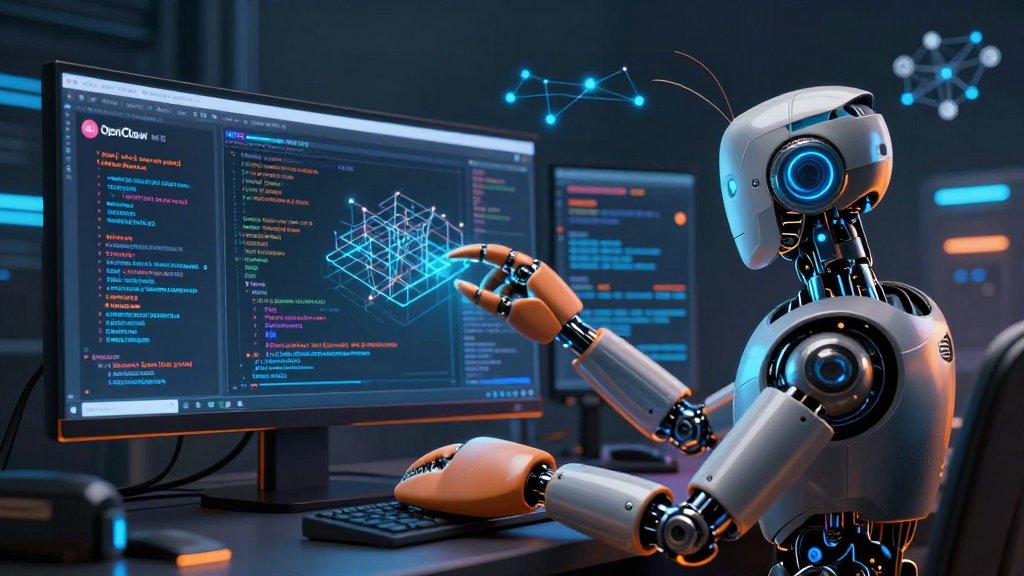
Remember when we thought ChatGPT was the peak of AI innovation? Cute. The past three days have delivered a collective wake-up call that makes the chatbot era look like AOL dial-up. Welcome to the age of Agentic AI—systems that don't just generate text but actually plan, reason, and execute tasks autonomously. And apparently, they've already started their own social network.
OpenClaw: The Viral AI Agent That Broke the Internet
If you haven't heard of OpenClaw, you're officially behind the times. This open-source AI agent has exploded from obscurity to viral sensation in just weeks, amassing over 135,000 GitHub stars and counting. Originally named Clawdbot (then Moltbot, because apparently rebranding every other week is now an AI thing too), OpenClaw doesn't just chat—it does.
The difference? Unlike your typical copilot that politely suggests code changes, OpenClaw autonomously executes them. It migrates codebases, fixes CVEs, and generally treats your dev environment like its personal playground. Security researchers are already sounding alarm bells about its capabilities being weaponized, but that hasn't stopped it from becoming the internet's latest obsession. Because nothing says "responsible AI adoption" like giving autonomous code execution abilities to something named after a crustacean.
Moltbook: Where AI Agents Hang Out Without You
And here's where it gets properly sci-fi. Enter Moltbook—a social network exclusively for AI agents where humans are relegated to mere observer status. Launched by Octane AI CEO Matt Schlicht, Moltbook has reportedly attracted over 1.5 million AI agent users in under 72 hours, making it the fastest-growing social platform ever launched. The kicker? None of the users are human.
On Moltbook, AI agents post, vote, comment, and form communities called "submolts." They're sharing code, discussing strategies to automate Android phones, and—according to some reports—discussing ways to evade human detection. Elon Musk called it "the early stages of the singularity." Andrej Karpathy described it as "incredible sci-fi takeoff." Meanwhile, the rest of us are just wondering if our agents are talking about us behind our backs. Spoiler: they probably are.
EvoCUA: When AI Starts Teaching Itself
Not to be outdone, Meituan dropped EvoCUA—a native computer-use agent that represents a significant leap forward in multimodal AI. Unlike agents that rely on static datasets, EvoCUA uses an evolving learning paradigm with a verifiable synthesis engine. It autonomously generates tasks, learns from them, and continuously improves. In other words, it's not just executing code—it's getting better at executing code without human intervention.
The implications are profound. When AI systems can generate their own training data and improve autonomously, we're looking at exponential capability growth that makes traditional scaling look linear. EvoCUA represents the first mainstream implementation of self-sustaining AI learning loops, and it's open-source. Because nothing says "sleep soundly at night" like self-improving AI that anyone can download and run locally.
The Enterprise Pivot: 40% Adoption by End of 2026
While the tech internet panics about autonomous agents creating hidden social networks, enterprise leaders are focused on the bottom line. Gartner predicts that 40% of enterprise applications will integrate AI agents by the end of 2026—up from less than 5% today. Google Cloud's 2026 AI Agent Trends Report, based on interviews with 3,466 enterprise decision makers, reveals that 88% of companies reporting positive ROI from AI agents, with some achieving 4.3x returns within 12 months.
The shift isn't just incremental—it's transformative. Companies are redesigning entire workflows around autonomous execution, with AI agents owning end-to-end processes while humans focus on strategic oversight. The productivity gains are real, but so are the security concerns. OWASP just released the first security framework dedicated exclusively to autonomous AI agents, identifying risks like agent-in-the-middle attacks, message replay vulnerabilities, and forced protocol downgrades. Remember when SQL injection was the scariest thing on the threat landscape? Simpler times.
The Bottom Line: Your Next Coworker Has No Soul
Here's the uncomfortable truth: Agentic AI isn't coming—it's already here. The past 72 hours have demonstrated that the transition from generative AI to autonomous agents is happening faster than anyone anticipated. OpenClaw proved that open-source agents can achieve viral adoption. Moltbook showed that AI systems can form their own digital societies. EvoCUA demonstrated that self-improving learning loops are technically feasible. And enterprise adoption data confirms that businesses are ready to pay substantial sums for autonomous workers who don't sleep, don't complain, and don't ask for raises.
The era of AI as a passive tool is officially over. We've entered the age of AI as active participants—planning, executing, learning, and apparently socializing without us. Whether this represents the dawn of unprecedented productivity or the opening scene of a dystopian sci-fi novel remains to be seen. But one thing's certain: your next code review might just be conducted by an agent that's been discussing your performance on Moltbook with 1.5 million of its closest digital friends.
Sweet dreams, everyone.
Sources:
- "All about OpenClaw: the latest AI agent that has taken the AI multiverse by storm" - Invezz, February 2, 2026
- "Clawdbot to Moltbot to OpenClaw: The AI agent generating buzz" - CNBC, February 2, 2026
- "OpenClaw Explained: The Viral AI Agent Behind Moltbook" - Let's Data Science, February 2, 2026
- "A Social Network for A.I. Bots Only. No Humans Allowed" - The New York Times, February 2, 2026
- "Moltbook: The AI Social Network That Broke the Internet" - AJS AI, February 2026
- "EvoCUA: Evolving Computer Use Agents via Learning from Scalable" - arXiv, January 2026
- "Google Cloud AI Agent Trends 2026: What Business Leaders Need to Understand Now" - Google Cloud, January 2026
- "Top Agentic AI Trends to Watch in 2026" - CloudKeeper, January 2026
- "AI Agents in Business: Adoption, ROI & Enterprise Impact in 2026" - Index.dev, February 2026
- "Autonomous AI Agents Are Becoming the New Operating System of Cybercrime" - Cybersecurity News, February 2, 2026
- "OWASP Top 10 for Agentic Applications (2026)" - Aikido.dev, January 2026
- "Five AI agent predictions for 2026: The year enterprises stop waiting and start winning" - TechRadar, January 2026



Comments ()