6G and the Future of Connectivity: What You Need to Prepare
Just when you finally wrapped your head around 5G and convinced yourself that buying that shiny new 5G-enabled phone was worth the premium, along comes 6G to remind you that tech progress waits for absolutely no one's wallet. The future of connectivity is barreling toward us like a freight train made of pure terahertz radiation, and frankly, you might want to start preparing now before your current internet speeds feel as primitive as dial-up.
The Terahertz Revolution Is Actually Happening
Remember all those breathless promises about 6G that sounded like science fiction? Well, researchers at the University of Notre Dame just made them look uncomfortably real. They've developed a revolutionary "leak wave antenna" that uses topological materials—fancy math made physical—to achieve actual 72 Gbps speeds with a mind-bending 75% three-dimensional spatial coverage.
Let that sink in for a moment. While you're celebrating if your gigabit fiber connection actually hits its advertised speeds, these researchers are pushing data at rates that make your current setup look like it's running on potato batteries. The technology uses specially designed silicon chips with triangular holes arranged to control how terahertz radiation leaks outward, creating a cone-shaped coverage pattern that handles both horizontal and vertical spaces.
What's particularly impressive—and slightly insulting to every telecommunications company that's made you suffer through weak signals—is that this doesn't require massive antenna arrays or mechanical beam steering that breaks constantly. It's all built into the chip structure itself, which means it might actually work reliably in the real world. Revolutionary concept, right?
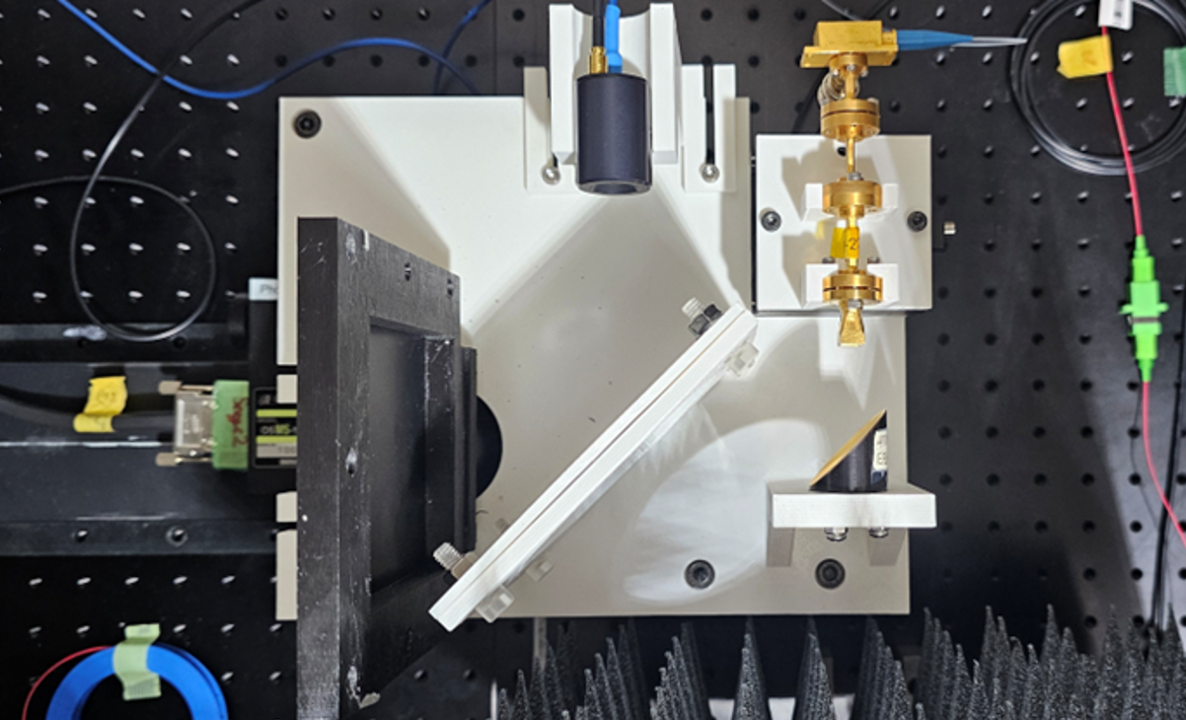
Image: Photonic Edge's 300GHz band measurement system represents the infrastructure foundation needed for 6G development. The company is working toward 450GHz capabilities as part of Japan's Beyond5G/6G initiatives.
The Infrastructure That Won't Build Itself
Here's the thing about revolutionary technology: someone has to measure it, characterize it, and figure out if it actually works outside a carefully controlled lab environment. Japanese company Photonic Edge is doing exactly that with their Sub-THz material measurement system, which just successfully demonstrated 300GHz band measurements.
Why does this matter? Because terahertz technology has historically been stuck in academic purgatory—fascinating in theory, impractical in reality. Photonic Edge's approach uses frequency-domain spectroscopy (FDS) instead of absurdly expensive vector network analyzers that would make any research budget weep. Their optical-based system is compact, relatively affordable, and can measure everything from a few GHz up to 1 THz.
The company plans to extend to 450GHz bands by the end of 2026, with commercial products arriving in 2027. In tech timeline terms, that's practically tomorrow. This isn't some far-flung 2040 fantasy—it's happening in your device refresh cycle.
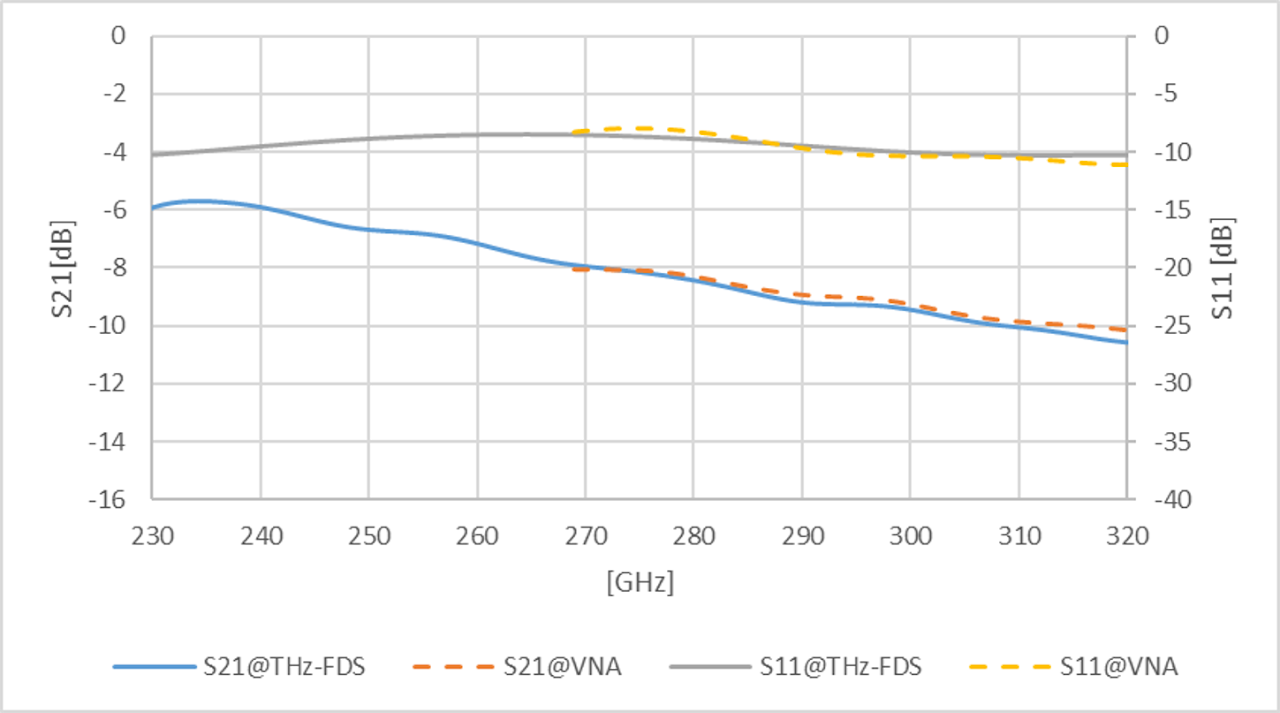
Image: Comparison measurements show Photonic Edge's system achieving results consistent with traditional but far more expensive VNA technology, making 6G research accessible to more organizations.
Wi-Fi 7: Your Bridge to the 6G Future
Before you panic that your expensive Wi-Fi 6 router is already obsolete, here's something genuinely useful: Wi-Fi 7 is effectively the training wheels for 6G. The technology ecosystem isn't replacing Wi-Fi with 6G—it's creating a partnership where 6G handles the highways and Wi-Fi manages local roads.
Wi-Fi 7 brings some serious capabilities to the table: 320 MHz channels (double the bandwidth of Wi-Fi 6), Multi-Link Operation (using multiple bands simultaneously), 4096-QAM modulation, and 16 spatial streams. The theoretical maximum speeds hit 46 Gbps—five times faster than Wi-Fi 6 and a pretty solid warm-up for 6G's promised 1 Tbps terahertz speeds.
The practical benefits are immediate: significantly reduced gaming latency, simultaneous 4K streaming across multiple devices, and smart home devices that actually respond when you tell them to. These aren't just nice-to-have improvements—they're the foundation for the kind of connectivity that 6G will eventually deliver to everything, everywhere.
What You Actually Need to Do About It
Here's where the rubber meets the road, or in this case, where your future terahertz signals meet your current device ecosystem. Preparing for 6G doesn't mean throwing out everything you own—it means making smart, incremental investments that keep you from being caught completely flat-footed when the revolution arrives.
Upgrade your Wi-Fi to 7 now: Even if your current devices can't fully leverage it, you'll see immediate benefits, and you'll be ready when 6G-aware hardware starts appearing. The performance improvements aren't theoretical—they're noticeable today.
Implement mesh networking: Whole-home coverage isn't just a luxury anymore. As more devices become connected and hungry for bandwidth, dead zones become increasingly unacceptable. Mesh systems ensure complete coverage and can handle the device counts that the future demands.
Enable modern security: WPA3 should be your minimum baseline. The more connected our world becomes, the more attractive a target it presents. Security isn't something you can layer on later—it needs to be foundational.
Plan for device growth: Your current device count is probably already higher than you realize. Between smart home devices, phones, tablets, laptops, and the Internet of Things that keeps multiplying, most households will need premium-tier connectivity within 2-3 years.
The Bottom Line
6G isn't coming—it's already being built in labs and research facilities around the world. The terahertz breakthroughs, the measurement infrastructure, the Wi-Fi 7 bridge technology—this isn't speculation anymore. It's an inevitability that's closer than most people realize.
The companies and individuals who prepare now won't just survive the transition—they'll thrive in an environment where connectivity is as fundamental as electricity. Those who wait until 6G is already here will find themselves playing catch-up in a world that doesn't slow down for late adopters.
Your move.

Comments ()